
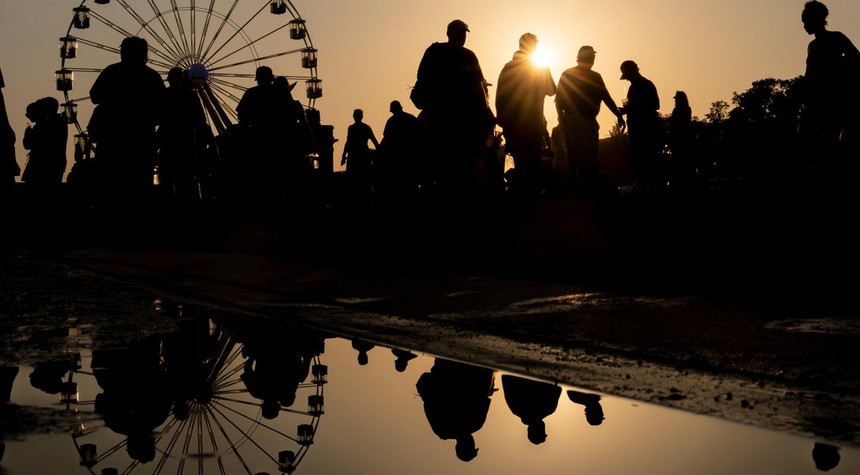
Washington residents awoke Sunday to find their city ranking among the world’s most polluted, a dramatic deterioration researchers have directly attributed to the massive fireworks displays that marked Saturday evening’s Independence Day celebrations.
The Metropolitan Washington Council of Governments, a nonprofit organization coordinating regional governance, issued a “purple” air quality alert for the nation’s capital and portions of northern Virginia. This designation represents the second-highest level of concern on the air quality index, categorizing conditions as “very unhealthy” for the general population.
Health officials have warned that even limited outdoor exposure carries potential health consequences under current conditions. The alert advises all outdoor physical activity be avoided for sensitive populations, while the broader public should refrain from prolonged outdoor exertion.
The sensitive groups facing heightened risk include individuals with heart or lung diseases, older adults, pregnant women, children and teenagers, outdoor workers, and others whose health may be disproportionately affected by elevated pollution levels.
Suburban communities surrounding the District of Columbia received somewhat less severe “orange” alerts Sunday, indicating air quality remains unhealthy for sensitive groups. These residents are being advised to reduce the duration and intensity of outdoor activities. The alert system breakdown shows that farther from the urban center, conditions improve modestly. Portions of Maryland were assigned “yellow” alerts, designating pollution levels as “moderate” and potentially problematic only for unusually sensitive individuals.
According to IQAir, a Swiss air quality technology company that maintains global pollution monitoring systems, Washington ranked sixth among the world’s most polluted cities on Sunday. The capital’s position placed it behind Pakistan’s Lahore and the Democratic Republic of Congo’s Kinshasa, which held first and second place respectively.
The correlation between Independence Day fireworks and deteriorating air quality is well documented in scientific literature, though the severity of Sunday’s conditions represents a particularly stark example. The combustion of fireworks releases substantial quantities of particulate matter and chemical compounds into the atmosphere, which can linger for extended periods depending on weather conditions and wind patterns.
Authorities have indicated that air quality should steadily improve across the capital and surrounding region over the coming days as atmospheric conditions disperse the accumulated pollutants.
The situation serves as a reminder that traditional celebrations, while culturally significant, carry environmental and public health implications that warrant consideration. As communities across the nation marked America’s founding with pyrotechnic displays, the residents of Washington experienced the tangible consequences of those festivities in the air they breathe.
And that is the way it is this Sunday in the nation’s capital.
Related: Deadly Heat Wave Claims 25 Lives as 40 Million Americans Face Extreme Temperatures
