
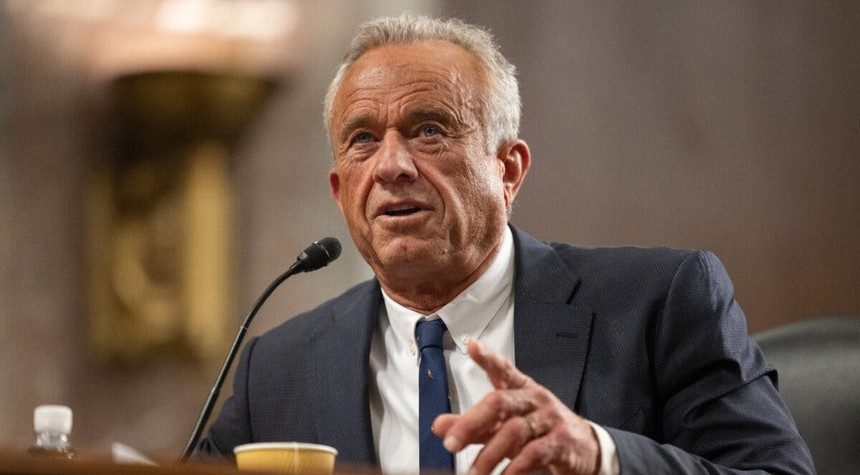
Robert F. Kennedy Jr. has committed his support to a bipartisan legislative effort aimed at fundamentally reshaping how the United States monitors and responds to emerging infectious disease threats.
Testifying before the Senate Finance Committee on Wednesday, Kennedy endorsed the PREDICT Act, a measure that would establish a nationwide wastewater surveillance network designed to detect pathogens before they develop into full-scale outbreaks. The legislation represents a significant expansion of public health infrastructure, one that gained momentum following lessons learned during the COVID-19 pandemic.
“I absolutely will work with you on the PREDICT Act,” Kennedy told lawmakers. “It is something that is very personally important to me to have more wastewater surveillance. And we are also putting $325 million in this budget into a new bio threat radar system that will integrate with the microbial surveillance at wastewater treatment facilities to detect pathogens as soon as they emerge in our country and elsewhere in the world.”
The bipartisan proposal was introduced by Senator Tim Scott of South Carolina and Senator Cory Booker of New Jersey, with additional support from Senators Maggie Hassan of New Hampshire, Ted Budd of North Carolina, Roger Wicker of Mississippi, and Angus King of Maine. The coalition reflects growing consensus that the nation’s disease detection capabilities require substantial modernization.
Senator Scott emphasized the practical necessity of such a system in remarks following the hearing. “Today’s hearing at the Senate Finance Committee underscored the importance of strong coordination in addressing public health challenges and staying ahead of emerging threats,” Scott stated. “I was proud to highlight the PREDICT Act, which I introduced to expand wastewater surveillance so we can identify outbreaks earlier and respond faster to protect our communities.”
The science behind wastewater surveillance is straightforward yet powerful. Infected individuals shed viral and bacterial particles that can be detected in municipal wastewater systems, often days or weeks before symptoms appear or widespread testing identifies a problem. This early warning capability provides health officials with critical lead time to mobilize resources, implement targeted interventions, and potentially prevent localized cases from becoming widespread outbreaks.
The method proved its value during the pandemic, when wastewater monitoring provided advance notice of COVID-19 surges in communities across the nation. Since then, the technique has been applied to track influenza, respiratory syncytial virus, and measles.
Recent events have demonstrated the continuing need for such capabilities. A measles outbreak in South Carolina has been cited by proponents as evidence that faster detection systems could prevent the kind of rapid spread that strains local health systems and requires costly containment efforts.
Under the PREDICT Act, the Centers for Disease Control and Prevention would receive authority and funding to establish and coordinate a national network of wastewater monitoring programs. The system would operate through partnerships with state and local health departments, universities, and private sector entities, creating a comprehensive surveillance infrastructure.
Supporters of the legislation argue that the investment delivers returns beyond public health. Early detection reduces the scale and duration of outbreaks, limiting hospital overcrowding and avoiding the economic disruptions that accompany large-scale health emergencies. Public health analysts have estimated that such systems could generate substantial per-person savings during future health crises by enabling more targeted and effective responses.
The commitment of $325 million in the proposed budget for a bio threat radar system signals that the administration views disease surveillance as a national security priority, not merely a public health concern. That perspective reflects a broader recognition that infectious disease threats can emerge rapidly and with little warning, requiring systems capable of detecting and responding to dangers before they escalate.
And that is the way it is.
Related: Devin Nunes Steps Down as CEO of Trump Media Amid Declining Stock Value
