
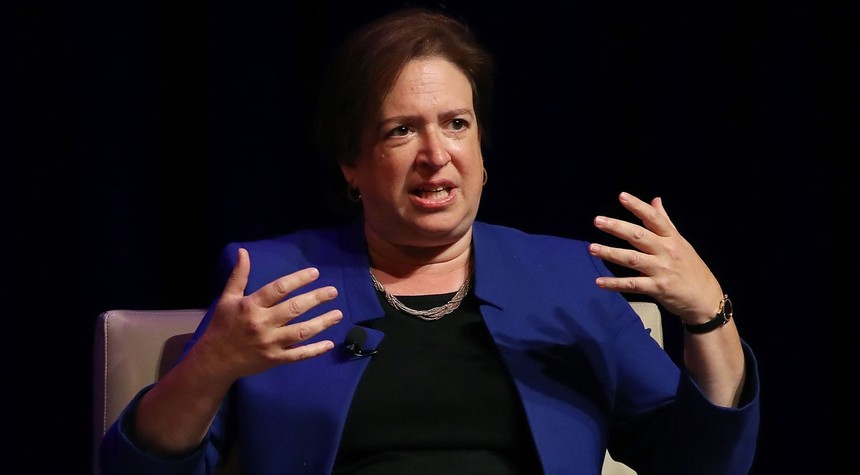
In remarks that underscore the deep ideological divisions within the nation’s highest court, Supreme Court Justice Elena Kagan has expressed concern that recent decisions by the conservative majority are undermining the proper functioning of American democracy.
The liberal justice delivered her assessment during a discussion with faculty and students at Catholic University’s law school in Washington. Her comments, made in conversation with law professor Joel Alicea, who previously served as a clerk to Justice Samuel Alito, represent a unusually direct public criticism of the court’s trajectory from a sitting member.
Kagan centered her critique on the court’s 2019 ruling in Rucho v. Common Cause, a decision in which she dissented. That ruling determined that federal courts lack jurisdiction to invalidate congressional maps drawn to favor one political party over another. The majority opinion held that such partisan gerrymandering questions are political matters beyond the reach of federal judicial review.
The justice characterized this decision as initiating what she termed a “race to the bottom” in redistricting practices. She argued the ruling has deprived substantial numbers of American citizens of their right to equal representation in the voting process.
According to Kagan, the proliferation of gerrymandered congressional districts following that decision has pushed voters away from political moderation. “Driving people away from the center toward the wings, toward the extremes. Making what I think is, unfortunately, a too polarized country even more so,” she stated.
The justice extended her criticism to additional rulings from the court’s most recent term, including decisions that loosened campaign finance restrictions and made it more challenging to create majority-minority congressional districts under the Voting Rights Act.
In Kagan’s assessment, these decisions reflect a troubling pattern. “Part of the reason why the court got it wrong was a kind of lack of the appropriate concern or understanding of the consequences of their decisions,” she explained. “I do think in all these areas the court has blinded itself to the very deleterious effects of their rulings on how the political system works and has created a democracy that doesn’t work as well as it should.”
These remarks arrive as the Supreme Court embarks on a new term featuring several high-profile cases. The justices are expected to rule on matters affecting the scope of Second Amendment rights and state election integrity laws, among other consequential issues.
The timing also coincides with ongoing redistricting battles across the nation. Both Republican and Democratic state legislatures have redrawn congressional maps following the most recent census, leading to numerous legal challenges in federal and state courts.
For observers of the Supreme Court, Kagan’s public statements represent an acknowledgment of the institution’s internal tensions. While justices occasionally offer their perspectives on legal philosophy in academic settings, such pointed criticism of the majority’s approach remains relatively uncommon.
The question facing the court is whether these divisions will affect its standing with the American public and its ability to command respect for its rulings across the ideological spectrum.
Related: Legal Battle Emerges Over Timeline in Charlie Kirk Assassination Trial
