
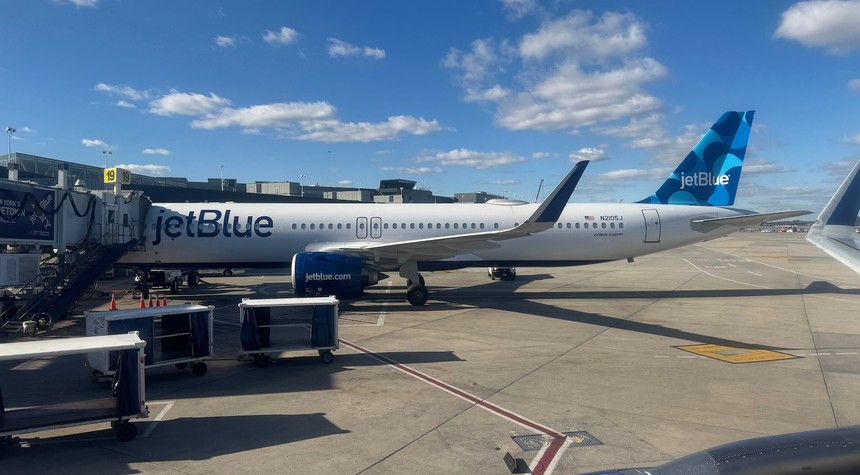
A JetBlue Airways pilot reported striking a drone while approaching John F. Kennedy International Airport on Monday morning, prompting a federal investigation into the incident that underscores growing concerns about unauthorized drone operations near major airports.
The aircraft, arriving from Las Vegas with passengers aboard, landed safely at approximately 3,000 feet after the reported collision occurred near a designated waypoint for flights entering the New York City area. Post-flight inspections conducted by both the airline and the Federal Aviation Administration revealed no damage to the aircraft and no physical evidence that a strike had occurred.
According to air traffic control recordings, the pilot communicated the incident while the aircraft was executing a turn. “We collided with a drone back there in the turn as we were coming to ASALT, just wanted to pass to you,” the pilot informed air traffic controllers, referencing the standard arrival waypoint. The pilot indicated the strike occurred just above the cockpit and confirmed the crew did not require assistance to complete the landing.
The FAA has opened an investigation into the matter, as is standard procedure for such reports. JetBlue issued a statement affirming that safety remains the company’s foremost priority and pledged full cooperation with federal investigators.
This incident highlights a persistent challenge facing aviation authorities. The FAA receives more than 100 reports of drone sightings near airports each month, a troubling statistic that reflects the proliferation of unmanned aircraft systems in American airspace. Federal regulations explicitly prohibit unauthorized drone operations near airports and commercial flights, yet enforcement remains an ongoing concern.
The legal consequences for violating these regulations are substantial. Drone operators who fly near aircraft or airports without authorization face civil penalties, criminal charges, and potential imprisonment. These penalties exist for good reason. A collision between a drone and a commercial aircraft could result in catastrophic consequences, particularly if the unmanned device were ingested into an engine or struck a critical flight surface.
The fact that inspections revealed no evidence of impact raises questions about what the pilot encountered. Investigators will need to determine whether a drone was indeed present, whether contact actually occurred, or if the pilot observed a near-miss that felt like a collision given the aircraft’s speed and altitude.
What remains clear is that the integration of recreational and commercial drones into the national airspace continues to present significant safety challenges. As drone technology becomes more accessible and affordable, the number of devices operating in proximity to controlled airspace has increased dramatically.
Federal authorities have implemented registration requirements, operational restrictions, and educational programs aimed at promoting responsible drone use. Yet incidents like Monday’s reported collision demonstrate that more work remains to be done in protecting commercial aviation from unauthorized drone operations.
The investigation will proceed according to standard FAA protocols, with findings expected to inform future safety recommendations and enforcement actions.
Related: Duck Boat Capsizes at Cambridge Tourist Attraction, Six Injured
