
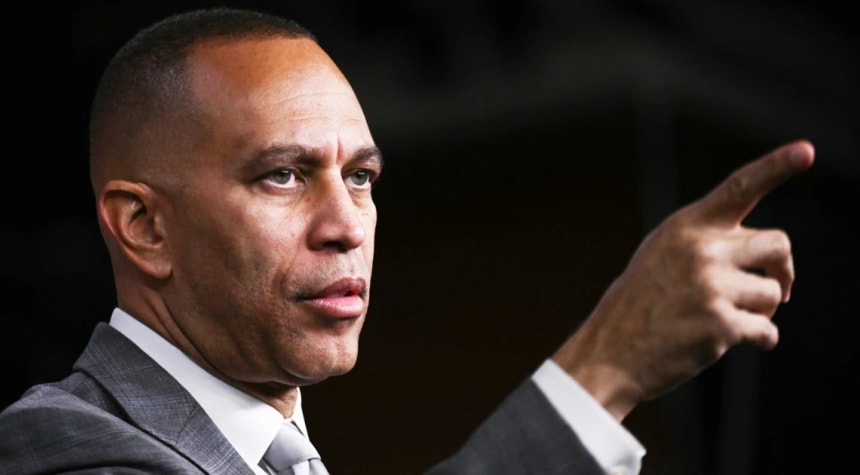
House Minority Leader Hakeem Jeffries of New York has outlined an ambitious health care agenda that Democrats intend to pursue once they assume their new majorities in both chambers of Congress next month. The proposals represent a significant expansion of the party’s campaign promises and would mark the most aggressive push to expand government health coverage since the passage of the Affordable Care Act.
Jeffries, who is expected to become Speaker of the House when the new Congress convenes on January 3, stated Tuesday that Democrats should use their electoral mandate to lower the Medicare eligibility age, expand the program to cover dental, vision, and hearing benefits, and establish universal health coverage for children across the nation.
"We should lower the age of Medicare eligibility. We should expand coverage to include vision, hearing, and dental. And we should cover all the kids in the United States of America," Jeffries said. "Those are bold actions, meaningful actions, important actions that can be taken on our march toward universal health coverage."
The remarks go considerably beyond the health care platform Jeffries presented to voters in September, which centered primarily on reversing President Trump’s Medicaid spending reductions and restoring enhanced Affordable Care Act tax credits that lapsed in January. While reiterating those priorities Tuesday, the Democratic leader made clear his party intends to pursue more fundamental changes to the American health care system.
Jeffries did not specify what age he believes Medicare eligibility should be lowered to, though the current age of 65 has been in place since the program’s inception in 1965. "Right out of the gate, we will aggressively work on fixing the extraordinary damage that’s been done," he said. "But we also know, as Democrats, that a return to the status quo is not acceptable. As part of our commitment that goes all the way back to FDR and Harry Truman to achieving universal access to health care for the American people."
The Democratic leader left open the possibility of advancing these measures through the budget reconciliation process, a parliamentary procedure that allows certain legislation to pass the Senate with a simple majority rather than the standard 60 votes required to overcome a filibuster. Such a strategy would enable Democrats to bypass Republican opposition but would likely set up a confrontation with President Trump, who would face the decision of whether to veto such legislation.
Current estimates project Democrats will control 259 seats in the House and 56 seats in the Senate, including a probable victory in Alaska. These margins would provide substantial room for the party to advance its legislative priorities, though any reconciliation bill would still require coordination between the two chambers.
Senator Bernie Sanders of Vermont, who will chair the Senate Health, Education, Labor and Pensions Committee in the new Congress, said Jeffries appears to be supporting what amounts to the first year of his Medicare for All proposal. Sanders noted that his plan includes lowering the Medicare eligibility age to 55, expanding benefits, and covering all children as initial steps in a four-year transition to a single-payer system.
The Democratic agenda also includes funding increases for pediatric cancer research and other medical research priorities. How much of this ambitious program can be enacted, and what compromises may be necessary, remains to be seen as the party prepares to assume control of Congress in the new year.
Related: Seattle Mayor Orders Renaming of Andrew Jackson Park
