
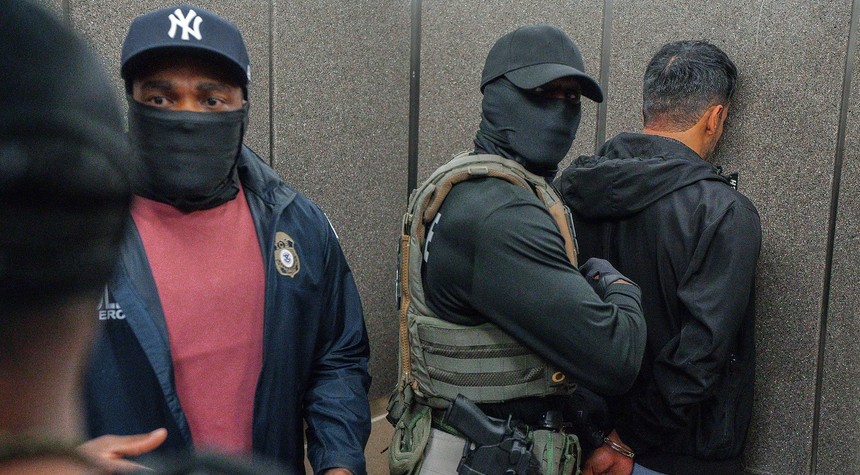
Immigration and Customs Enforcement detention figures reveal a significant gap between stated policy objectives and operational reality in the current administration’s approach to immigration enforcement.
Government data obtained through Freedom of Information Act requests shows that only three percent of individuals detained by ICE during the first fourteen months of President Trump’s second term had violent felony convictions. This figure emerges from an analysis of federal records provided to the Deportation Data Project and the University of Washington Center for Human Rights.
The administration had made clear its intention to prioritize what the President termed “the worst of the worst” criminal offenders among the migrant population. However, the data indicates that immigration enforcement operations have affected more than 400,000 individuals with no violent criminal history whatsoever. This group includes parents and spouses of United States citizens.
The three percent rate of violent offenders among detainees represents no statistical improvement over figures recorded during the Biden administration, despite substantially higher overall detention numbers. What has changed is the scale of enforcement operations. The current administration has achieved record detention levels, with approximately 60,000 individuals now held in federal immigration custody. By comparison, the highest detention figure under the previous administration reached 39,748 in November of that final year.
These numbers present a straightforward mathematical reality. While the total number of detained individuals with violent criminal backgrounds has increased in absolute terms due to the larger overall detention population, the proportion of such individuals has remained constant. The administration is detaining more people across all categories, but not concentrating its efforts more heavily on violent offenders as measured by percentage of the total detained population.
The implications warrant careful consideration. Immigration enforcement represents a substantial federal undertaking, requiring significant resources in terms of personnel, detention facilities, legal processing, and transportation. The allocation of these resources reflects operational priorities, whether stated or unstated.
Federal immigration detention facilities now house their largest population in the program’s history. This expansion has occurred while maintaining the same proportional mix of detainees by criminal background as existed under different policy guidance. The data suggests that current enforcement operations cast a wider net rather than a more targeted one.
The 400,000 individuals without violent criminal histories who have been affected by these enforcement actions represent families, workers, and community members whose removal from American society carries consequences beyond immigration statistics. Among them are individuals with direct family ties to American citizens through marriage or parenthood.
This represents the reality of immigration enforcement as it currently operates, measured not in rhetoric or policy statements, but in documented government figures. The numbers tell their own story about how federal resources are being deployed and which populations are bearing the weight of expanded enforcement operations.
The American people deserve a clear understanding of how their government conducts immigration enforcement, based on factual data rather than political characterization. These figures provide that clarity.
Related: Maine Democratic Senate Candidate Criticized for Post Targeting Elon Musk’s Wealth
