
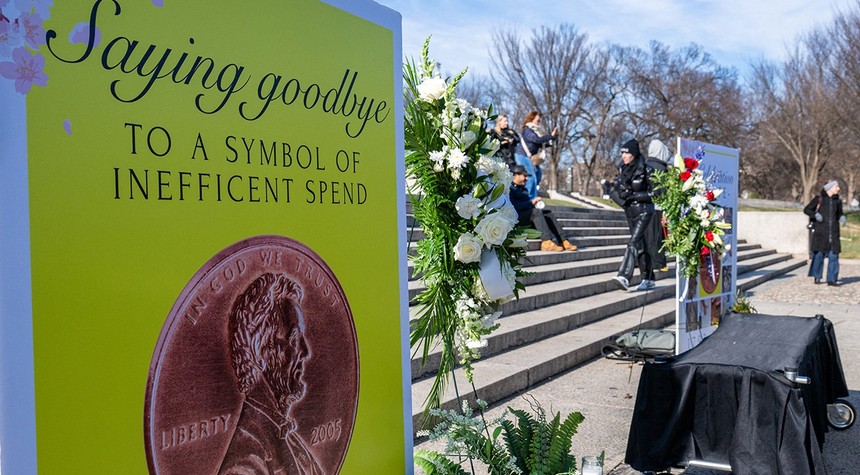
The House of Representatives voted unanimously Monday to eliminate the penny from American currency, marking the potential end of a coin that has circulated in this nation for more than two centuries.
The bipartisan Common Cents Act now moves to the Senate, where it faces an uncertain future amid broader debates over fiscal policy and cryptocurrency regulation. Should it pass both chambers and receive President Donald Trump’s signature, the legislation would permanently prohibit the Treasury from minting additional pennies, except for collectors’ editions.
The bill, sponsored by House Republican Conference Chair Lisa McClain of Michigan and Representative Robert Garcia of California, the ranking Democrat on the House Oversight Committee, establishes a framework for rounding cash transactions to the nearest five cents. This provision addresses the practical concern of how commerce would function without the smallest denomination of currency.
Under the proposed law, cash wages would receive special protection, requiring any rounding to favor the employee. Existing pennies would retain their status as legal tender, though their gradual disappearance from circulation appears inevitable.
The U.S. Mint ceased penny production in November 2025 after 232 years of continuous manufacturing. The Treasury Department justified this decision on purely economic grounds. The cost of producing a single penny had risen to more than three times its face value by 2025, a fiscal reality that became increasingly difficult to defend. The Treasury estimates immediate annual savings of fifty-six million dollars from halting production.
This legislative effort represents the second attempt by Congress to address the penny question. McClain previously led successful passage of a bill directing the federal government to stop minting the coin, which also cleared the Senate. However, that earlier legislation lacked provisions for handling cash transactions in a penny-free economy, a gap the current bill aims to close.
The measure includes an additional provision authorizing the U.S. Mint to manufacture nickels from less expensive materials, potentially generating further cost savings for taxpayers.
While the House achieved rare unanimity on this matter, the Senate faces a more complicated legislative calendar. The upper chamber prepares for a test vote on landmark cryptocurrency legislation, a battle that has divided lawmakers along both partisan and ideological lines. President Trump has voiced support for the cryptocurrency industry, while Senators Elizabeth Warren of Massachusetts and Adam Schiff of California lead the opposition.
The penny’s elimination, should it become law, would represent a significant shift in American commerce and daily life. For more than two centuries, the one-cent coin has served as the smallest unit of official currency, its copper-colored face bearing the profile of Abraham Lincoln since 1909.
The question now moves to the Senate, where fiscal conservatives may welcome the cost savings while others debate the symbolic importance of preserving every denomination of American currency. The outcome will determine whether Americans must finally part ways with their pennies, or whether the familiar coin receives an unlikely reprieve.
That is the way it stands tonight.
Related: Voters Express Doubts Over Feasibility of President’s Midterm Cash Payment Proposal
