
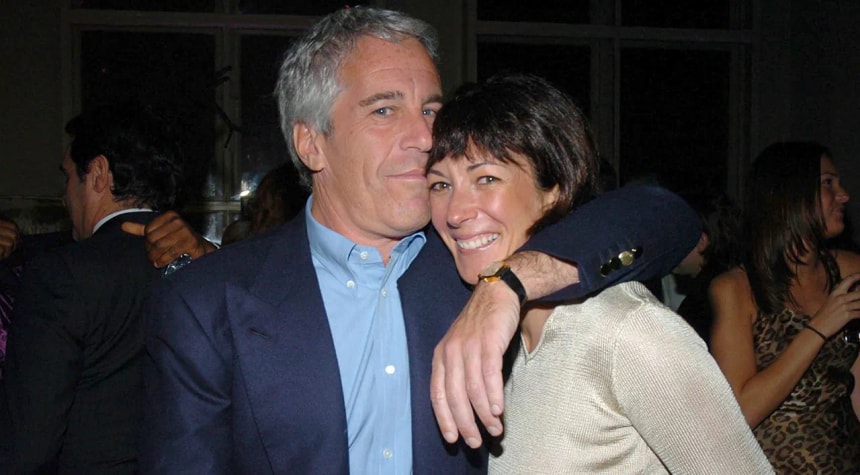
A comprehensive congressional investigation has concluded that a pattern of prosecutorial failures, preferential treatment, and institutional negligence permitted Jeffrey Epstein and Ghislaine Maxwell to continue exploiting young women and girls for years after federal authorities first learned of their activities.
The House Oversight Committee released its findings following an extensive investigation into one of the most troubling criminal justice failures in recent American history. The report raises serious questions about the conduct of federal prosecutors, the oversight capabilities of financial institutions, and the judgment of individuals who maintained associations with Epstein despite mounting evidence of his criminal enterprise.
At the center of the committee’s concerns are potential conflicts of interest involving two former federal prosecutors assigned to the original Epstein investigation. Matthew Menchel, a senior federal prosecutor who recommended resolving Epstein’s case through a non-prosecution agreement, had previously been romantically involved with Lilly Ann Sanchez, who later became one of Epstein’s attorneys. According to documents reviewed by the committee, Menchel failed to recuse himself from the investigation and continued meeting and communicating with Epstein even after the agreement was finalized.
Investigators learned of an alleged photograph showing Menchel skiing with Epstein in Colorado during the early 2000s, though they could not verify its existence or establish that it improperly influenced prosecutorial decisions. Menchel has denied skiing with Epstein but acknowledged meeting with him after leaving federal service. His attorneys characterized their correspondence as concerning potential legal representation and referrals, none of which materialized into business relationships. They further maintained that Menchel was not responsible for the final plea agreement, which proved more lenient than his initial recommendation.
A Justice Department Office of Professional Responsibility report from 2020 determined that while Menchel failed to disclose his relationship with Sanchez to supervisors, no evidence of prosecutorial misconduct could be established.
The investigation also examined the conduct of former federal prosecutor Bruce Reinhart, who established a private law practice while still employed by the United States Attorney’s Office and subsequently represented associates of Epstein. His practice became involved in matters related to Epstein’s work-release program. Former United States Attorney Alexander Acosta testified that he could not determine whether Reinhart had access to information about the Epstein investigation while serving as a federal prosecutor.
The committee’s findings paint a disturbing picture of evidence destruction and obstruction. Sarah Kellen, a former assistant to Epstein, testified that he instructed another assistant to remove computers, hard drives, and other equipment from his Palm Beach residence before authorities executed a search warrant in 2005. Federal investigators believed this equipment contained evidence of sexual exploitation. Epstein’s attorney later confirmed that the hard drives were in the possession of private investigators, yet federal authorities abandoned efforts to recover this evidence before finalizing the non-prosecution agreement.
Perhaps most troubling was the treatment Epstein received following his 2008 conviction. Rather than serving his sentence in a federal facility, Epstein spent approximately thirteen months of an eighteen-month sentence in a county jail with extraordinary privileges. He was permitted to leave confinement for up to twelve hours daily, six days each week, ostensibly for work at the Florida Science Foundation, which the committee characterized as a sham organization. During these absences, Epstein traveled in private vehicles accompanied by paid off-duty sheriff’s deputies, met visitors without continuous monitoring, and visited his Palm Beach residence. Survivors alleged that Epstein continued sexually abusing them during this work-release period.
The investigation also examined relationships between Epstein and prominent individuals, including billionaire Bill Gates and Commerce Secretary Howard Lutnick. Lutnick acknowledged visiting Epstein’s private island for lunch with his family in 2012, contradicting his previous claim that he had severed ties with Epstein in 2005. Gates testified that Epstein requested reimbursement for expenses involving a woman with whom Gates had an extramarital affair, a request Gates said he refused.
The committee recommended further investigations into several individuals, including Lesley Groff, who served as Epstein’s executive assistant for nearly two decades. Groff scheduled Epstein’s daily massage appointments and coordinated travel and lodging for women visiting his properties, yet testified that she remained unaware of his criminal activities. She continued working for Epstein following his 2008 conviction.
The committee has called for stronger protections for trafficking survivors and comprehensive reforms to prevent similar failures within federal law enforcement. The Justice Department has been urged to pursue further investigation of several individuals identified in the report. These recommendations represent an acknowledgment that the American justice system failed catastrophically in this case, allowing a predator to operate with impunity despite clear warning signs and credible allegations.
Related: Tech Companies Recruit Democratic Veterans as Party Prepares to Control Congress
