
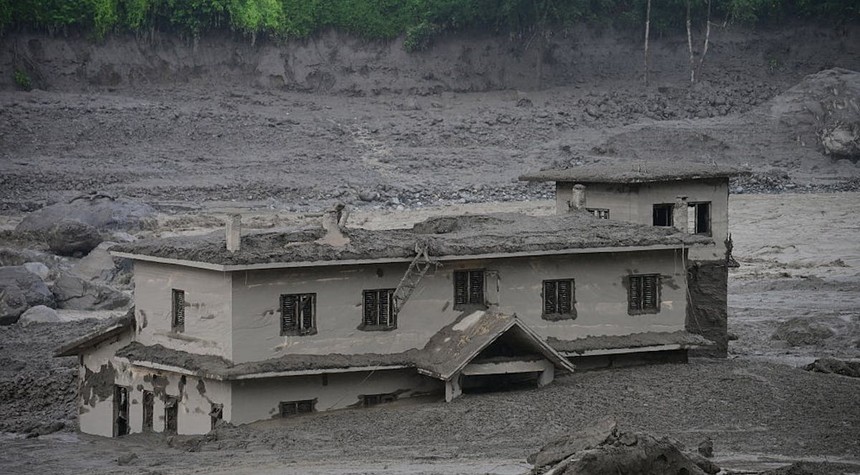
The death toll from a catastrophic mountain collapse in the Himalayas has reached 903, with more than 4,000 people still missing in what has become one of the deadliest natural disasters in recent memory. Among those unaccounted for are approximately 85 Americans, according to State Department spokesman Tommy Pigott.
The disaster began high in the Himalayas near the Nepal-Tibet border when a massive glacier and rock slope suffered a catastrophic failure. The U.S. Geological Survey reported that the initial collapse generated energy equivalent to a magnitude 5.2 earthquake. A second seismic event, registering the equivalent of a magnitude 4.2 earthquake, occurred approximately three hours later.
What followed was a devastating surge of water, ice, mud, and debris that traveled approximately 62 miles down steep Himalayan valleys. Relief workers on the ground describe the phenomenon as a “mountain tsunami” that obliterated entire communities in minutes. In some areas, river waters rose an astonishing 30 feet in just 30 minutes, giving residents virtually no time to evacuate.
The official count of missing persons in Nepal has reached 4,247, including nearly 600 foreign nationals. More than 90,000 people have been directly affected by the disaster, which has destroyed homes, collapsed critical bridges, severed roads, and crippled telecommunications and electrical infrastructure across the region.
The situation remains precarious. A massive landslide-dammed lake above the critical Nepal-Tibet border checkpoint is currently overflowing, threatening to burst and unleash a second wave of destruction downstream. Officials warn that the unstable terrain could delay full recovery operations for months.
Rescue crews are working around the clock using heavy machinery, controlled explosives, and searchlights to locate 933 workers missing from several hydropower projects in the Rasuwa and Nuwakot districts. The scale of devastation has overwhelmed local morgues, forcing authorities in the Chitwan district to dig hundreds of emergency mass graves in a nearby forest to handle bodies that were carried miles downstream by the torrential waters.
International search and rescue teams have joined local authorities in what has become a race against time. As each day passes, the likelihood of finding survivors diminishes, yet families continue to hold hope as rescue operations press forward through the treacherous, shifting landscape.
The disaster serves as a stark reminder of the raw power of nature and the vulnerability of mountain communities to such catastrophic events. As climate patterns continue to shift and affect glacial stability in the world’s highest mountain ranges, questions about the safety of populations living in these vulnerable regions will undoubtedly intensify.
For now, the focus remains on the immediate humanitarian crisis, locating the missing, and preventing further loss of life should the unstable lake above the border give way.
Related: Orange County Animal Control Employs Drone Technology to Rescue Lost Pets