
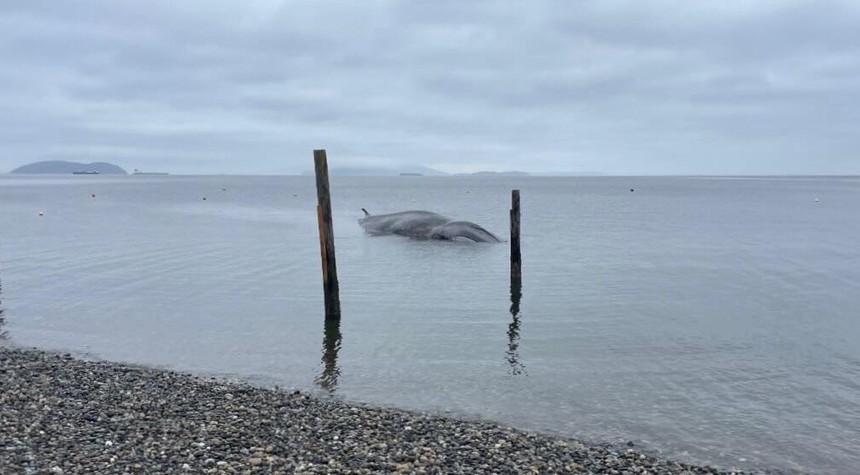
A forty-ton fin whale died after becoming stranded on the gravel beach of Samish Island, Washington, marking the latest casualty in an alarming pattern of whale deaths along the state’s coastline.
The National Oceanic and Atmospheric Administration’s regional branch reported that the whale became stranded Monday evening. When researchers from local organizations arrived Tuesday morning, the massive marine mammal had already perished.
The male fin whale measured more than sixty-one feet in length. According to NOAA, the animal’s overall condition had deteriorated significantly, and it was severely emaciated by the time rescuers reached the scene. Photographs from the site show the enormous creature lying in shallow water along the island’s shoreline.
Fin whales rank as the second-largest animals on Earth, surpassed only by blue whales. This extraordinary size presents unique challenges for rescue operations. As NOAA officials noted, the dimensions of fin whales severely limit the options available for moving or freeing stranded animals, even when intervention might otherwise prove feasible.
A necropsy will be performed to determine the cause of death. Following that examination, NOAA indicated that the carcass will be left to decompose naturally.
This incident occurs against the backdrop of a troubling increase in whale mortality throughout Washington waters. At least sixteen whales have died in the state over the past twelve months, representing an unusual spike that has drawn the attention of marine researchers and conservation officials.
John Calambokidis, founder of the Cascadia Research Collective, has been tracking this disturbing trend. According to his research, many of the deceased whales appeared to have died from starvation. Calambokidis suggests that climate change may be reducing Arctic and Alaskan food supplies that whales in the region depend upon for sustenance. He documented at least thirteen strandings since March alone.
The implications of these deaths extend beyond individual animals. Fin whales, like other large cetaceans, play crucial roles in marine ecosystems. Their decline may signal broader environmental changes affecting the Pacific Northwest’s coastal waters.
NOAA has issued guidance for anyone who encounters a stranded whale. The agency urges immediate contact with authorities but cautions against attempting to move the animal or interact with it directly. Such interventions, however well-intentioned, can prove dangerous to both the whale and the person attempting to help.
The pattern of whale deaths in Washington waters demands continued monitoring and investigation. Whether these incidents represent a temporary anomaly or the beginning of a more sustained crisis remains to be determined. What stands clear is that the marine environment along the Pacific Northwest coast faces pressures that warrant serious attention from scientists, policymakers, and the public alike.
As researchers prepare to examine this latest casualty, the findings may provide valuable insights into the challenges facing these magnificent creatures in an changing ocean environment.
Related: Trump Restores Performance-Based Presidential Fitness Test to American Schools
