
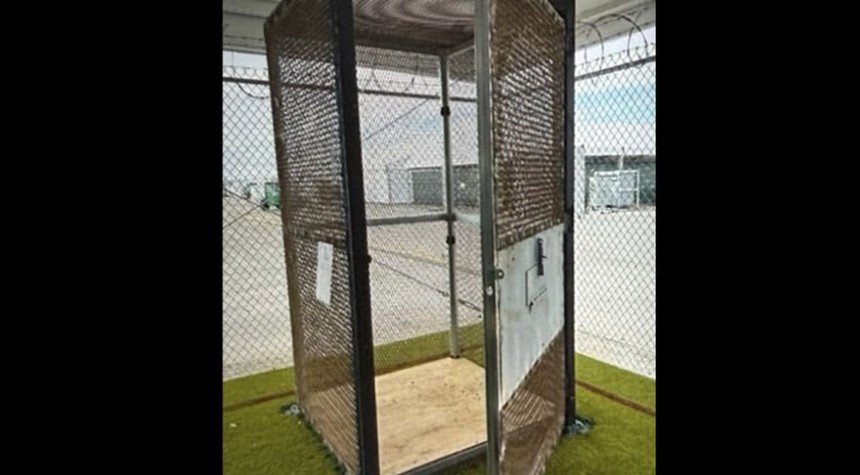
The Department of Homeland Security’s inspector general has confirmed the existence of outdoor metal enclosures measuring approximately sixteen square feet at a now-closed Florida immigration detention facility, marking the first time a federal agency has officially acknowledged these controversial holding spaces.
The inspector general’s report, released following a January inspection of the South Florida Detention Facility in the Everglades, describes the enclosures as “highly unconventional” and states they do not align with standards for humane treatment. Facility staff characterized these spaces as “calming areas” intended for detainees to de-escalate and spend time alone, though some individuals were confined in them for more than an hour at a time.
The dimensions of these outdoor cages, measuring roughly four feet by four feet, represent less than half the minimum space requirements established by Immigration and Customs Enforcement guidelines. According to ICE standards, rooms designed to hold a single person should provide at least thirty-seven square feet. For context, solitary confinement cells in federal prisons typically measure approximately eighty-four square feet. The facility also contained indoor cages of eighteen square feet.
The findings substantiate earlier claims made by advocacy organizations regarding conditions at what Florida’s attorney general termed “Alligator Alcatraz.” Previous investigations based on detainee interviews had characterized the cages as punitive measures, allegations that prompted congressional inquiry.
The facility opened in July 2025 under an initiative by Governor Ron DeSantis’s administration and operated through a federal partnership known as a 287(g) agreement. These arrangements permit state and local law enforcement agencies to conduct immigration enforcement activities typically reserved for federal authorities. Under the terms of such agreements, ICE maintains supervisory responsibility and must ensure compliance with federal immigration law and agency policies.
Questions regarding operational oversight have emerged in the wake of the report. The Department of Homeland Security has indicated it lacked authority over daily operations at the facility, according to a signed response from the department’s undersecretary of management. This position appears to conflict with the stated terms of 287(g) agreements, which specify that immigration enforcement activities will be supervised and directed by ICE.
The report from Inspector General Joseph Cuffari represents a notable instance of public criticism from within the administration. Cuffari is among the few Cabinet-level inspectors general who survived the recent dismissal of at least eighteen inspectors general across various federal agencies. These independent watchdogs operate within federal departments but are tasked with conducting objective audits and investigating allegations of waste, fraud, and abuse of power.
The facility has since been shuttered, though the inspector general’s findings raise substantial questions about the implementation and oversight of state-federal immigration enforcement partnerships. The revelation that federal guidelines regarding minimum space requirements were not met adds weight to ongoing debates about the treatment of individuals in immigration detention and the appropriate balance between enforcement objectives and humane standards of confinement.
The matter underscores the importance of independent oversight mechanisms within government operations and the role of inspectors general in bringing such conditions to public attention.
Related: Precious Metals Market Sees Silver Emerge as Affordable Portfolio Option