
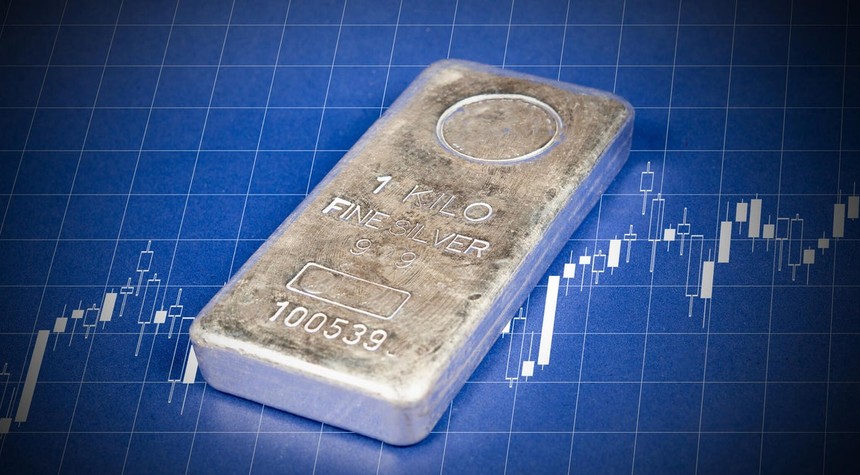
Silver has emerged as a compelling investment opportunity for Americans seeking protection against economic volatility, with prices climbing more than 200 percent since January 2025.
As of September 11, 2026, silver trades at $65.12 per ounce, according to precious metals dealers. This represents a substantial increase from $31 per ounce at the beginning of last year. The surge comes as inflation concerns and higher interest rates have prompted investors across the spectrum to seek refuge in tangible assets.
While gold has captured considerable attention by approaching the $5,000 per ounce threshold and setting numerous price records, silver has quietly assembled an impressive rally of its own. Long regarded as the more accessible precious metal for average investors, silver now presents both opportunity and challenge for those evaluating their portfolio strategies.
The factors driving silver’s ascent mirror many of those supporting gold’s performance. During periods of elevated inflation, precious metals have historically maintained their purchasing power when paper currencies falter. This characteristic makes silver particularly attractive for investors seeking to protect accumulated wealth from erosion.
For those whose portfolios lean heavily toward traditional stocks, bonds, or real estate holdings, silver offers meaningful diversification. The metal’s price movements often diverge from conventional asset classes, providing a hedge when other investments face headwinds.
The current price environment raises an important question for prospective investors: should one wait for a potential decline before entering the market? Market observers generally counsel against such timing strategies. Silver prices demonstrate volatility in the short term but have trended upward over extended periods. Waiting for temporary price corrections may ultimately prove more costly than entering the market at current levels.
Industrial demand adds another dimension to silver’s investment thesis. Unlike gold, which serves primarily monetary and ornamental purposes, silver plays a critical role in various manufacturing applications. This industrial component provides fundamental support for prices independent of investment demand.
The past year’s price charts for both gold and silver illustrate potential for near-term profits, even though precious metals traditionally do not generate income like dividend-paying stocks or interest-bearing bonds. Investors who positioned themselves in silver during the early months of 2025 have seen substantial appreciation in their holdings.
Current market conditions suggest this trend may continue, particularly if certain economic circumstances persist. Elevated inflation, geopolitical tensions, and uncertainty about monetary policy all contribute to sustained interest in precious metals as safe-haven assets.
For Americans priced out of the gold market entirely, silver represents a practical entry point into precious metals investing. The lower per-ounce cost allows for meaningful exposure without the capital requirements that gold demands.
Prospective investors would be well-served to consult with financial advisors or precious metals specialists to determine appropriate allocation levels. Individual circumstances, risk tolerance, and overall portfolio composition should guide these decisions.
The silver market’s performance over the past twenty months demonstrates that this often-overlooked precious metal deserves serious consideration as Americans navigate an uncertain economic landscape.
Related: New York Giants Remember Heroes and Victims of September 11 Before Opening Game
