
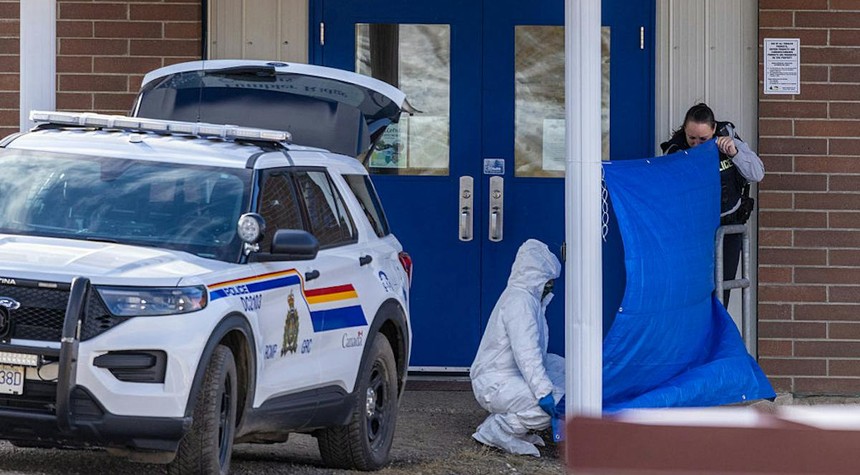
Federal authorities announced Tuesday the arrest of a 30-year-old Washington state man accused of providing material support and tactical guidance for a school shooting in rural Canada that claimed eight lives in February.
James Cody Bryant of Bellingham faces charges of conspiracy to murder a person in a foreign country after investigators linked him to 18-year-old Jesse Van Rootselaar, who carried out the deadly attack at Tumbler Ridge Secondary School in British Columbia on February 10.
According to the criminal complaint filed by FBI Special Agent Joseph Rico, Van Rootselaar murdered his mother and 11-year-old stepbrother before proceeding to the school, where he killed five children and one employee. The gunman took his own life during the attack.
The investigation gained traction after the messaging platform Discord provided authorities with communications between Van Rootselaar and an account associated with Bryant. FBI agents interviewed Bryant at his residence on February 12, just two days following the massacre.
The evidence presented in the complaint paints a troubling picture of prolonged coordination. Prosecutors allege that Bryant and Van Rootselaar began communicating online when the younger man was 15 years old and Bryant was in his late twenties. Over the following years, their exchanges allegedly evolved from general conversation to specific planning for a mass casualty event.
In August 2025, approximately six months before the attack, Bryant reportedly agreed to livestream the planned assault on the internet. The complaint details tactical advice Bryant allegedly provided, including instructions to avoid hallways where potential victims could escape more easily. “Hallways also mean a lot of ways people can escape. Corners to turn. Wide open spaces means numbers,” Bryant wrote, according to court documents.
Bryant also allegedly advised Van Rootselaar to carry a handgun during the attack and confirmed that Van Rootselaar possessed “solid plans.” The complaint indicates Bryant assisted in testing livestreaming equipment and was aware that Van Rootselaar had purchased a tactical chest rig designed to carry additional firearm magazines.
In the months preceding the attack, Bryant allegedly took steps to conceal their communications, suggesting they use virtual private networks to mask their digital trail and discussing methods to delete their message history. “I think we should find a way to delete all our messages,” Bryant wrote in one exchange included in the complaint.
The complaint also reveals that Bryant suggested Van Rootselaar consider alternative targets, specifically mentioning a church or grocery store to avoid harming young children. Nevertheless, the school ultimately became the target of Van Rootselaar’s rampage.
Weeks before the murders, Bryant allegedly sent Van Rootselaar money to purchase a lighter intended for use with an explosive device Van Rootselaar planned to detonate during the attack, according to prosecutors.
During his initial FBI interview, Bryant admitted to communicating with Van Rootselaar in the months prior to the shooting and acknowledged viewing Van Rootselaar’s attempted livestream of the attack.
The Justice Department confirmed that both Bryant and Van Rootselaar identified as transgender, though officials emphasized this detail as a matter of accurate reporting rather than a focal point of the investigation.
The case represents a troubling evolution in mass violence, wherein alleged conspirators coordinate across international borders through encrypted digital platforms. Federal prosecutors will now seek to prove that Bryant’s actions rose to the level of criminal conspiracy in what stands as one of Canada’s deadliest school attacks in recent memory.
Related: Customs Officers Discover $5 Million in Cocaine Concealed in Bus Entering from Mexico
