
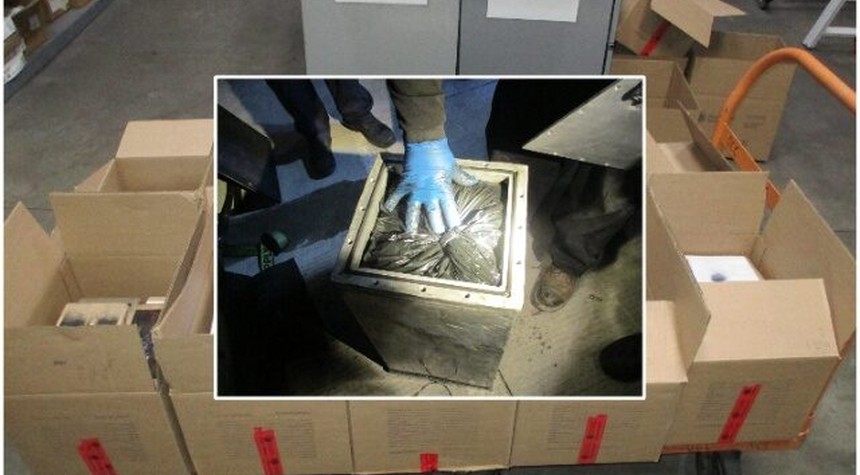
United States Customs and Border Protection officers intercepted more than 262 pounds of cocaine at the San Ysidro Port of Entry in Southern California on September 22, preventing narcotics valued at approximately $5 million from entering American communities.
The seizure occurred during what began as a routine inspection of a 2004 MCI Dina commercial passenger bus attempting to cross from Mexico into the United States. Officers at the port of entry observed the vehicle approaching and referred the driver to a secondary inspection station for further examination.
At the secondary station, officers employed a nonintrusive inspection system that detected irregularities in the bus’s fuel tank. A CBP canine unit subsequently alerted to the same area during an exterior examination of the vehicle, prompting officers to conduct a more thorough physical inspection.
Upon closer examination, officers discovered evidence of tampering with the fuel tank, including the installation of a non-factory compartment. Inside this concealed space, officers found 110 packages of cocaine that had been hidden by drug smuggling operations.
The driver, a Mexican national, was taken into custody at the scene. His visa has been canceled, prohibiting him from legally reentering the United States in the future. He will be processed and transferred to California law enforcement authorities to face state charges related to the importation of illegal narcotics.
San Ysidro Port Director Mariza Marin commended the work of the officers involved in the interdiction. The seizure, she stated, demonstrates the effectiveness of combining officer experience with advanced detection technology and canine support. She emphasized that this level of vigilance and coordination is essential to preventing dangerous narcotics from reaching American neighborhoods.
The San Ysidro Port of Entry represents one of the busiest land border crossings between the United States and Mexico, making it a critical point for both legitimate commerce and potential smuggling operations. The high volume of traffic through the port requires constant attention from border protection personnel.
This seizure represents the latest in ongoing efforts by Customs and Border Protection to intercept illegal narcotics at the southern border. Under the current administration’s direction, the Department of Homeland Security has intensified focus on removing criminal aliens from the country, including gang members and drug traffickers, as part of broader efforts to enhance public safety.
The case illustrates the methods employed by drug cartels to transport narcotics across the border, including the use of sophisticated concealment techniques in commercial vehicles. The discovery of the non-factory compartment indicates a deliberate effort to modify the vehicle specifically for smuggling purposes.
The successful interdiction removed a significant quantity of cocaine from the drug distribution pipeline before it could reach American streets. That is the way it is.
Related: Hundreds of Israeli Memorial Flags Torn Down at Texas Church
