
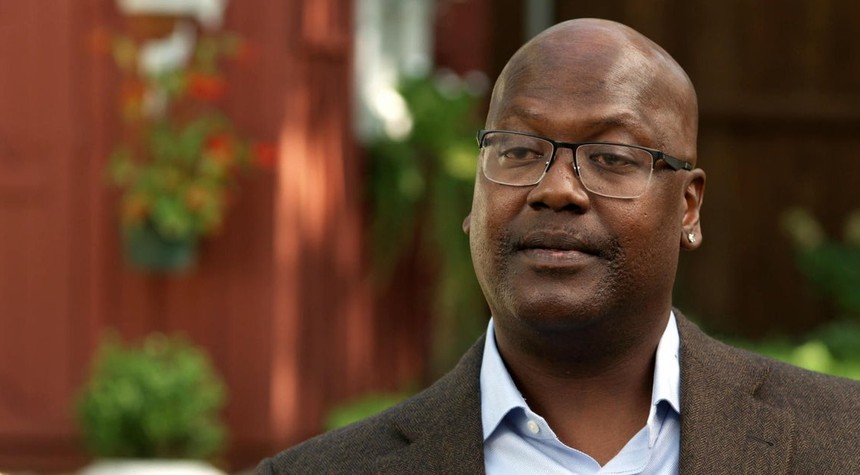
Curtis Flowers, whose case became one of the most troubling examples of prosecutorial conduct in modern American jurisprudence, has died at his home in Winona, Mississippi. He was 56 years old.
Attorney Rob McDuff, who represented Flowers throughout much of his legal ordeal, confirmed the death on Thursday. No cause of death has been released, and the family has requested privacy during this difficult time.
The facts of Flowers’ case are stark and demand careful examination. On a July morning in 1996, four people were murdered execution-style at Tardy Furniture in Winona. The victims included the store’s owner, a bookkeeper, a delivery man, and a 16-year-old employee. All had been shot in the head.
Flowers had worked at the furniture store briefly that summer but left after three days. Police questioned him following the murders but did not immediately arrest him. He subsequently moved to Texas to live with his sister, where authorities arrested him in January 1997. He had no prior criminal history.
What followed represents what McDuff described as an “unprecedented” sequence of events in American legal history. District Attorney Doug Evans tried Flowers six separate times for the same crime. The first trial, conducted before an all-White jury, resulted in a conviction after just one hour of deliberation. Flowers, then 27, received a death sentence.
That conviction was overturned on appeal, as were the next two convictions. The legal grounds were significant: prosecutorial misconduct, including misrepresentation of evidence to juries and discriminatory jury selection. Two additional trials ended in mistrials before Evans secured a conviction in 2010 that initially withstood appeal. Flowers returned to death row.
The evidence against Flowers remained problematic throughout all six trials. Investigators never recovered the murder weapon. No DNA evidence linked him to the crime scene. No fingerprints connected him to the murders.
Investigation by reporters at American Public Media’s “In the Dark” podcast proved pivotal. Their examination of the case led witnesses to recant previous testimony, including one who had claimed Flowers confessed. Perhaps most significantly, their analysis of court records revealed a disturbing pattern: Evans had systematically excluded Black jurors at a disproportionate rate across numerous cases.
The numbers from Flowers’ trials tell their own story. Of 72 jurors who served across all six trials, 61 were White. All 61 voted to convict.
In 2019, the United States Supreme Court ruled that Evans and the state of Mississippi had violated Flowers’ constitutional rights. Justice Brett Kavanaugh, writing for the majority, characterized the prosecution’s conduct as a “relentless, determined effort to rid the jury of Black individuals.”
Six months after that ruling, Flowers walked free on bail, leaving incarceration for the first time in 23 years. In 2021, he described that moment simply: “I felt like I was floating. I was just ready to go.”
The state of Mississippi never retried Flowers a seventh time. The charges were ultimately dropped.
Flowers spent nearly a quarter century behind bars, much of that time on death row, for crimes that the highest court in the land determined he was unconstitutionally convicted of committing. He lived only three years as a free man after his release.
That is the way it is.
Related: Children’s Network Nickelodeon Faces Questions Over Parent Guide Content
