
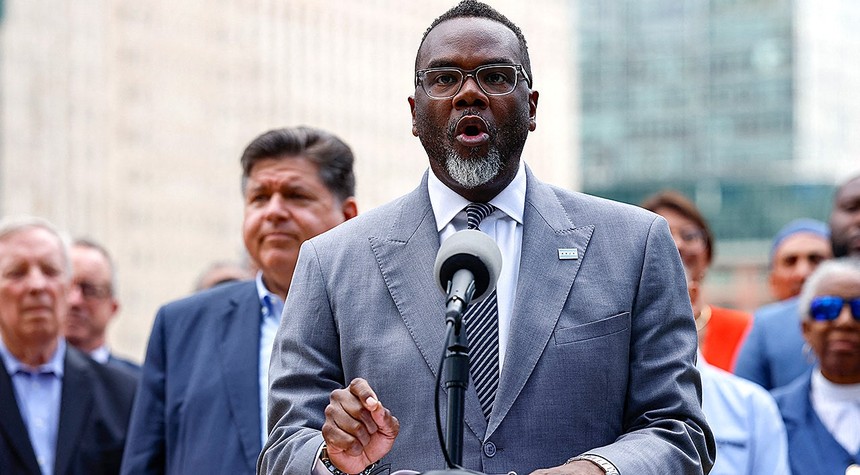
Chicago Mayor Brandon Johnson has placed himself at the center of a growing controversy over municipal priorities, declaring his intention to resist federal immigration enforcement while the city continues to grapple with persistent violence affecting its youngest residents.
During a recent television appearance, Mayor Johnson voiced his support for naming a city snowplow “Abolish ICE” as part of Chicago’s annual snowplow naming contest. The mayor’s comments have reignited debate over whether city leadership has lost focus on the fundamental challenges facing Chicago’s neighborhoods.
The mayor’s position has drawn particular criticism from community advocates who point to the city’s ongoing struggle with youth violence. Under the current administration, Chicago has witnessed hundreds of school-age children become victims of street violence, a crisis that critics argue demands the full attention of municipal leadership.
In a video statement, Johnson drew parallels between resistance to federal immigration enforcement and the historical struggle for civil rights. “If we don’t push back against Trump and ICE with everything that Black people used to get us free, we’re going to find ourselves subjugated to tyranny,” the mayor declared. “One thing is for sure: Not in Chicago.”
The statement has raised questions about consistency in the mayor’s messaging. Critics note an apparent contradiction between invoking the success of past freedom movements while simultaneously characterizing current systems as fundamentally oppressive. The mayor has previously described inherited governmental structures as products of systemic racism, yet now references those same historical struggles as having achieved freedom.
Beyond immigration policy, Mayor Johnson has weighed in on matters ranging from solidarity with Minneapolis to foreign policy concerning Venezuela. These broader political engagements have prompted questions about whether such initiatives serve Chicago’s immediate interests while the city faces pressing domestic challenges.
The facts on the ground present a sobering picture. According to former mayoral candidate Paul Vallas, more than 500 school-age children have been affected by violence since Mayor Johnson assumed office. Educational outcomes remain persistently poor, with Chicago Public Schools continuing to struggle with achievement gaps and safety concerns.
Critics have also pointed to what they describe as a paradox in the mayor’s characterization of systemic problems. Chicago’s current leadership structure includes Black officials in numerous key positions, including the mayor himself, the superintendent of police, the Illinois attorney general, the state Senate majority leader, the lieutenant governor, the secretary of state, and the CEO of Chicago Public Schools. The Cook County Board president, the Chicago Fire Department commissioner, and the city treasurer are similarly Black officials in positions of authority.
This demographic reality in Chicago’s leadership has led some to question whether the mayor’s frequent invocations of systemic racism adequately address the policy decisions being made by current officeholders. The suggestion from critics is that accountability for present-day outcomes must rest with those currently holding power, regardless of historical grievances.
The fundamental question facing Chicago residents centers on priorities. With limited resources and attention, city leadership must determine whether resistance to federal immigration policy serves the immediate needs of communities experiencing daily violence. For families who have lost children to street crime, the answer appears increasingly clear.
The debate over Mayor Johnson’s approach reflects a broader national conversation about the proper role of municipal government and the allocation of political capital. As Chicago continues to navigate these challenges, the measure of success will ultimately be found in the safety and prosperity of its most vulnerable residents.
And that is the way it is.
Related: UN Secretary General Questions American Commitment to International Norms
