
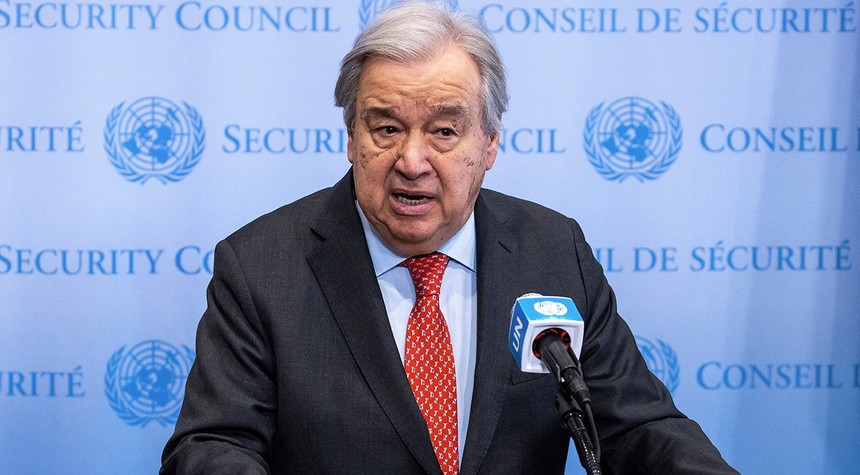
United Nations Secretary General António Guterres has issued a pointed warning about American foreign policy, suggesting the United States has abandoned its traditional commitment to international law in favor of exercising raw power on the global stage.
In remarks that carry particular weight given the Trump administration’s ongoing reassessment of America’s role in multilateral institutions, Guterres articulated concerns that Washington has fundamentally shifted its approach to international relations. The UN chief’s comments come at a moment when questions about American engagement with global bodies have moved from the margins to the center of foreign policy debate.
“The power of law should be replaced by the law of power,” Guterres said, characterizing what he views as the prevailing philosophy guiding current American foreign policy. His assessment represents more than diplomatic disagreement. It signals a deepening divide between the United States and international institutions that have formed the backbone of the postwar order.
The Secretary General elaborated on his concerns, stating that American policy demonstrates “a clear conviction that multilateral solutions are not relevant and that what matters is the exercise of the power and the influence of the United States.” He added that this approach sometimes operates outside the norms of international law.
These remarks follow a United Nations Security Council meeting addressing recent developments in Ukraine, including a Russian strike that has drawn international attention. The juxtaposition is notable. As the Security Council grapples with clear violations of international norms by Russia, the UN’s chief executive publicly questions whether the United States itself remains committed to the very framework it helped establish.
President Trump has made no secret of his skepticism toward international organizations, particularly those he believes constrain American sovereignty or extract American resources without commensurate benefit. His administration has consistently argued that previous administrations subordinated American interests to multilateral consensus, weakening the nation’s position rather than strengthening global stability.
The fundamental question raised by Guterres’ comments extends beyond any single administration. It concerns whether the international order constructed after World War Two remains viable, or whether the world has entered a new era where national power supersedes international agreement.
Supporters of the current American approach would argue that international law has often proven ineffective against determined adversaries, and that American strength, properly applied, provides more genuine security than paper commitments. Critics counter that abandoning the rules-based order invites chaos and legitimizes the very behavior America seeks to constrain in adversaries like Russia and China.
What remains clear is that the tension between sovereignty and international cooperation, between national interest and global norms, has reached a critical juncture. The United Nations chief has now made explicit what many have observed: America’s relationship with the international institutions it helped create is undergoing fundamental transformation.
Whether this represents a necessary correction or a dangerous departure depends largely on one’s view of how best to secure American interests in an increasingly complex world.
Related: Three Tourists Killed in Random Attack Outside Florida Rental Home
