
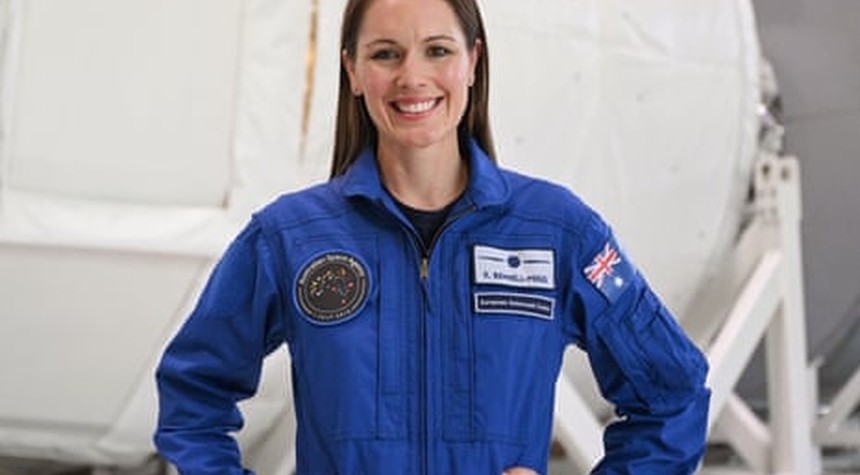
Australia has taken a decisive step toward sending its first nationally flagged astronaut to the International Space Station, with the federal government extending a formal offer to the European Space Agency for a 2028 mission.
The government announced Friday that it has secured more than six million dollars in private philanthropic commitments, along with state government support, to fund the mission of Katherine Bennell-Pegg, the nation’s 2024 Australian of the Year. Science Minister Tim Ayres acknowledged the substantial cost of the undertaking, noting that extensive engagement with the private sector and multiple levels of government proved necessary to make the mission financially viable.
“We are grateful to the philanthropists who have committed over six million dollars in cash, plus in-kind support, and some indicative support from some state governments,” Ayres said in announcing the decision.
Bennell-Pegg serves as director of space technology at the Australian Space Agency and completed her astronaut training with the European Space Agency in 2024. While not the first Australian-born person to travel to space, she would become the first to do so under the Australian flag, a distinction the government has emphasized in its outreach efforts.
Previous Australian-born space travelers include Dr. Andy Thomas and Paul Scully-Power, both of whom flew on NASA missions as United States citizens. Elaine Hyde, who holds dual Australian and US citizenship, took a suborbital flight aboard Blue Origin last year.
The Australian Space Agency entered treaty-level discussions with the European Space Agency in May, establishing what officials described as “a formal framework for enhanced cooperation between Australia and Europe.” Those negotiations laid the groundwork for the current offer.
In August, federal ministers wrote to state and territory leaders requesting partnership support for what they characterized as “a complete Australian mission that includes locally developed experiments and technology.” South Australia, which houses the Space Agency’s headquarters, became the first state to publicly commit funding support.
South Australian Premier Peter Malinauskus framed the mission as a national economic imperative, pointing to workforce shortages in technical fields. “Katherine Bennell-Pegg has the potential to inspire a new generation to dream big and address the single biggest challenge to our economy, which is productivity,” he said.
“Australia has a massive shortage of young people taking up the fields of science, technology, engineering and mathematics, and we need more of it if we are going to grow the nation’s productivity,” the premier continued. “Nothing would motivate young people more to take up these fields of endeavor than seeing Australia’s first ever flagged astronaut in space.”
The mission represents a significant development in Australia’s space program, which has historically relied on partnerships with other nations rather than independent capabilities. The blended funding model, combining federal resources with private philanthropy and state government support, reflects the substantial cost barriers that have prevented previous Australian space missions.
The 2028 timeline provides several years for final preparations, contingent upon European Space Agency acceptance of the Australian government’s formal offer.
Related: Key Health Adviser Resigns from Trump Administration Amid Policy Frustrations