
A major liquefied natural gas pipeline project in Alaska has taken a significant step toward realization this week, with federal officials characterizing the development as central to the Trump administration’s energy independence objectives.
Alaska LNG, an entity of the Glenfarne energy company, has formed a partnership with energy technology corporation Baker Hughes to construct an ambitious infrastructure project spanning nearly 1,000 miles through Alaska. The undertaking includes both an 807-mile pipeline and a corresponding export terminal on the Kenai Peninsula.
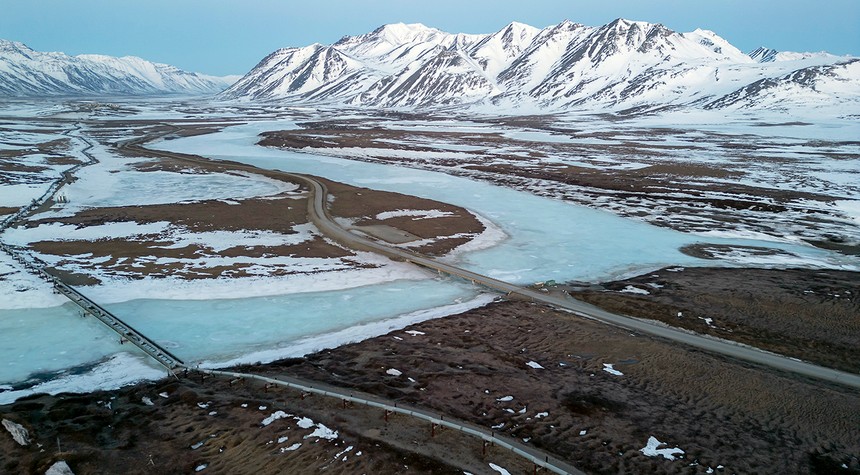
The proposed pipeline would originate near Prudhoe Bay on the Arctic Ocean and extend southward to the village of Nikiski, located between Anchorage and Homer. The 42-inch diameter pipeline represents one of the most substantial energy infrastructure proposals in recent American history.
Energy Secretary Chris Wright and Interior Secretary Doug Burgum jointly announced the partnership agreement. Glenfarne chief executive Brendan Duval emphasized the importance of Baker Hughes’ participation, citing the company’s specialized expertise in LNG compression technology as particularly valuable to the project’s success.
Secretary Wright characterized the development as a pivotal moment for American energy security. The project holds potential significance not only for Alaska’s economic prosperity but for the broader energy security interests of the United States and its international partners, according to Wright’s assessment.
Interior Secretary Burgum, who chairs the National Energy Dominance Council, described American LNG as a strategic asset that extends beyond mere energy production. The collaboration between Glenfarne and Baker Hughes is expected to yield substantial benefits in terms of new energy infrastructure capable of providing long-term, affordable power sourced domestically.
Baker Hughes chairman Lorenzo Simonelli noted that natural gas offers consumers secure and reliable energy at competitive rates. The fuel also produces lower carbon emissions compared to alternative energy sources, according to Simonelli.
The project includes plans for a carbon-capture facility on Alaska’s North Slope with the capacity to remove approximately seven million tons of carbon dioxide annually from the project’s operations. This environmental component addresses concerns about emissions while maintaining the project’s energy production objectives.
Alaska Governor Mike Dunleavy has consistently advocated for developing the state’s energy resources. The current administration’s support for the Alaska LNG project aligns with broader federal policy objectives aimed at increasing domestic energy production and reducing dependence on foreign energy sources.
The partnership announcement marks increased momentum toward the mega-project’s eventual completion. Duval stated that attracting global partners remains essential to achieving both national and state energy objectives through this infrastructure development.
The project’s progression represents a concrete application of the administration’s energy dominance agenda, demonstrating how public policy objectives translate into specific infrastructure investments with potential long-term economic and strategic implications for the nation.
Related: Coast Guard Reports Best Recruitment Year in More Than Three Decades
