
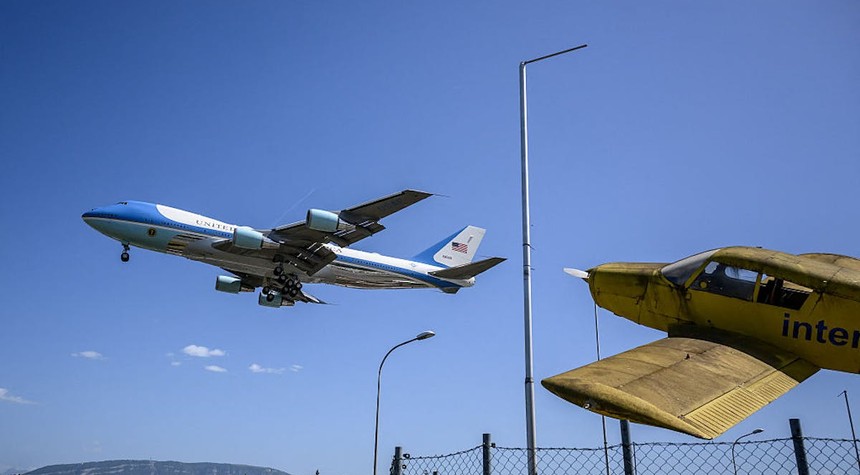
An era in American presidential history drew to a close this week as the Boeing 747-200 aircraft that has served as Air Force One for more than three decades completed its final mission.
President Donald Trump returned from the G7 summit in Europe aboard the iconic aircraft on Thursday, marking what White House officials confirmed would be the plane’s last presidential flight. The retirement comes as the first of three replacement aircraft currently undergoing modifications for presidential service nears completion and delivery.
White House Communications Director Steven Cheung marked the occasion with a simple tribute, calling it “the last ride” and adding, “Well done, good and faithful servant.” Deputy Chief of Staff Dan Scavino, who has accompanied the president on the aircraft for five and a half years, expressed gratitude for the opportunity to travel the world aboard what he described as an iconic plane.
The Boeing 747-200 has been in presidential service for 35 years, carrying multiple administrations across continents and through pivotal moments in American history. The aircraft has become synonymous with American executive power and diplomatic presence, instantly recognizable by its distinctive blue and white livery and the words “United States of America” emblazoned along its fuselage.
The transition to new aircraft represents a significant modernization of the presidential fleet. The incoming planes will feature updated technology, enhanced security measures, and improved communications capabilities necessary for contemporary presidential operations. The modifications required to transform commercial aircraft into vessels suitable for presidential use are extensive, involving secure communications systems, defensive countermeasures, and the ability to serve as an airborne command center.
The retirement of the current Air Force One also represents a substantial investment in presidential infrastructure. The replacement program has been in development for several years, with careful attention paid to both operational requirements and cost considerations. The new aircraft are expected to serve future administrations for decades to come, much as the retiring Boeing 747 has done.
For those who have worked aboard the aircraft, the farewell carries particular significance. The plane has not merely been a mode of transportation but a flying symbol of American leadership and continuity of government. Crew members, support staff, and officials have logged countless hours aboard the aircraft, managing everything from routine domestic travel to critical international diplomatic missions.
The Boeing 747’s retirement from presidential service does not diminish its place in history. The aircraft has witnessed and facilitated American diplomacy during a transformative period in global affairs, carrying presidents to summits, state visits, and moments of international crisis and cooperation.
As the White House prepares to welcome the new generation of presidential aircraft, the outgoing Boeing 747 stands as a testament to American engineering, presidential tradition, and the enduring symbol of executive authority that travels wherever the commander-in-chief must go. The transition marks not an end, but rather the continuation of a tradition that ensures America’s president can conduct the nation’s business anywhere in the world at a moment’s notice.
Related: New Fungus Species Found in Borneo Targets Parasite Known to Control Ant Behavior
