The death of Dan Carney at age 95 closes a remarkable chapter in American business history. The co-founder of Pizza Hut built what would become a global restaurant empire from humble beginnings in Wichita, Kansas, transforming a $600 loan from his mother into one of the nation’s most recognizable brands.
In 1958, Dan Carney and his younger brother Frank borrowed that modest sum from their mother, Mary, and purchased secondhand equipment to open their first pizza restaurant. The concept proved sound. Within a year, the brothers had opened their first franchised location in Topeka, Kansas. By 1971, Pizza Hut had achieved a milestone that would have seemed impossible during those early days: it had become the world’s largest pizza restaurant chain in both sales and number of locations.
The brothers sold their creation to PepsiCo in 1977 for approximately $300 million, but the brand they built had already established itself as an American institution. The distinctive red roofs, the vinyl booths, the stained-glass-style lamps, and those red plastic drinking cups became as much a part of the American landscape as any traditional restaurant chain.
Pizza Hut was not merely a place to purchase food. For generations of American families, it served as the backdrop for birthday celebrations, family gatherings, and community events. The experience was part of the product, something that set it apart in an increasingly crowded marketplace.
The chain developed memorable elements that enhanced its identity. Pizza Pete, a mustachioed cartoon character sporting a checkered neckerchief, apron and hat, became one of the company’s earliest recognizable symbols. Created by illustrator Ed Pointer, a fraternity brother of Dan Carney, Pete appeared on advertisements, drinking cups, bags and restaurant signs, embedding himself in the memories of millions of young Americans.
As American dining habits evolved, Pizza Hut, like many of its competitors, shifted its focus toward delivery and carryout operations. The traditional sit-down restaurants that had defined the brand for decades increasingly gave way to a more transactional model of food service.
Yet nearly seventy years after the Carney brothers opened that first location, some Pizza Hut franchisees are discovering that the past may hold the key to future success. Several operators have converted locations back to the classic format, complete with the nostalgic atmosphere that defined the brand’s golden era.
The results have been remarkable. In Homosassa Springs, Florida, dine-in sales more than doubled after one restaurant was converted to the throwback design. Tim Sparks, president of Daland Corporation, which operates dozens of dine-in Pizza Hut restaurants from its Wichita headquarters, has reported that customers are traveling considerable distances to relive childhood memories. Perhaps more significantly, these classic restaurants appear to encourage something increasingly rare in modern dining: genuine conversation among patrons who set aside their phones to engage with one another.
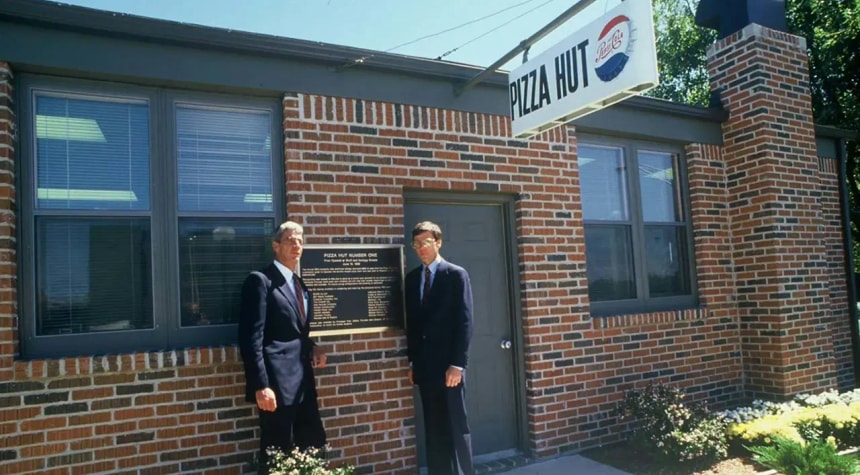
The original 1958 Pizza Hut building now resides on the campus of Wichita State University, where it has served as a museum since 1986. The small structure houses memorabilia and artifacts from the company’s early years, a testament to what American entrepreneurship and a good idea can accomplish.
Visitors to the museum can still pose for photographs with a likeness of Pizza Pete, whose image remains as a reminder of simpler times. That the chain is now actively embracing its heritage suggests that in an age of rapid change, there remains considerable value in remembering where we came from.
Related: House Committees Secure Testimony from Nvidia’s Former CEO After Subpoena Threat