
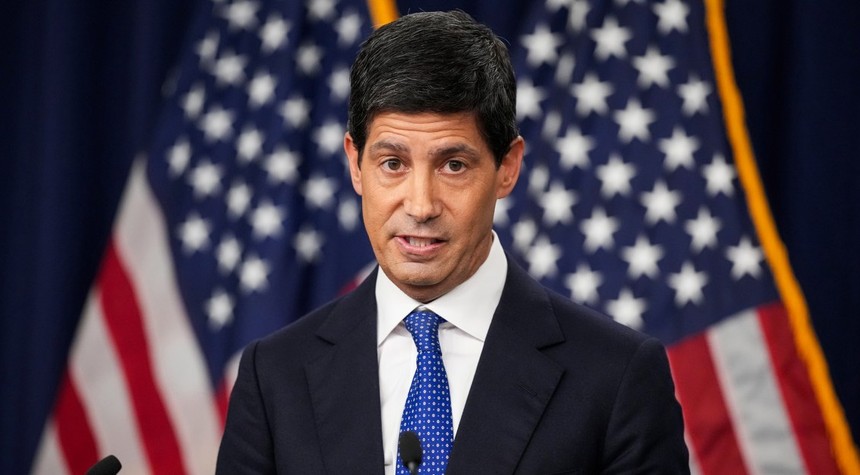
Federal Reserve Chairman Kevin Warsh indicated Friday that additional interest rate increases remain likely as the central bank continues its battle against inflation, while pointing to an unprecedented surge in artificial intelligence investment as a transformative force reshaping the American economy.
Speaking at the annual meeting of the International Monetary Fund and the World Bank in Bangkok, Warsh stated that economic conditions have broadly aligned with Federal Reserve expectations since the central bank raised rates in September for the first time since 2023. That move came as inflation, measured by the consumer price index, climbed to 3.7 percent, with businesses experiencing even sharper price increases.
“We made very clear we’d deliver price stability,” Warsh told the assembled financial leaders Friday morning Bangkok time, language that economists interpreted as a strong signal that another rate hike looms on the horizon. The chairman declined, however, to specify whether such action would come in October or December, maintaining the measured ambiguity that has characterized recent Fed communications.
“We’re not in that business anymore,” Warsh said when pressed for specific timing.
The chairman devoted considerable attention to what he described as a massive investment surge driven by artificial intelligence development, calling it “probably the most important thing that’s happening in the global economy on the upside.” This technology boom, Warsh suggested, represents such a fundamental shift that it will alter how the Federal Reserve conducts monetary policy in the years ahead.
The AI revolution has triggered an expansive construction of data centers across the nation. Technology giants are committing and borrowing enormous sums to purchase servers, memory chips, and related components. Major corporations including Apple and Nintendo have already raised consumer prices in response to these pressures. Apple reported in June that component price increases reached levels of speed and magnitude never before witnessed.
The financial implications extend beyond direct corporate spending. Data center operators, utility companies serving those facilities, semiconductor manufacturers, and cloud computing providers are expected to raise between 300 billion and 570 billion dollars from debt markets this year, according to investment firm Vanguard. These companies are offering interest rates that in some cases exceed returns on United States Treasury bonds, creating competition for investment capital that further complicates the economic landscape.
Warsh projected optimism about artificial intelligence ultimately improving productivity and generating wealth for nations that successfully harness the technology. Yet he tempered that outlook with caution about near-term disruptions, particularly regarding employment.
“The path from where we are to there is likely to be a very bumpy one,” the chairman warned.
The Federal Reserve has assembled a task force of outside experts to examine AI’s impact on labor markets, with a public hearing scheduled for November. This initiative reflects the central bank’s recognition that technological transformation may require new approaches to its traditional mandates of price stability and maximum employment.
“I want you to hear from me optimism, but optimism leavened by the seriousness of purpose to the day jobs that you and I have,” Warsh remarked, acknowledging both the promise and the uncertainty that artificial intelligence brings to economic policymaking.
The chairman’s comments underscore the complex challenge facing the Federal Reserve as it navigates not only cyclical inflation concerns but also structural economic changes that may reshape productivity, employment, and growth for years to come.
Related: Rising Energy Costs Force Difficult Choices for Working American Families
