
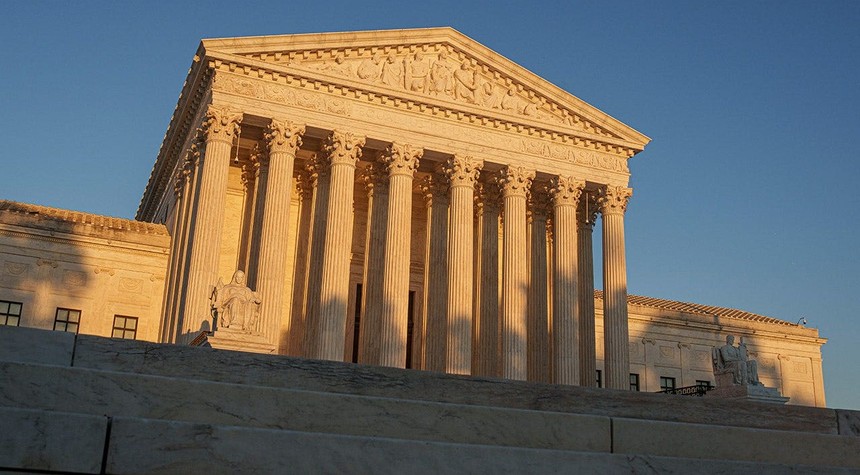
The Supreme Court has agreed to hear a case that could fundamentally alter how immigration authorities interpret terrorism-related grounds for denying asylum, centering on a Nigerian man who claims he was forced to cook meals for a militant organization.
The justices will review the Trump administration’s challenge to a lower court ruling that overturned the deportation order of Izuchukwu Ozurumba, a Nigerian citizen who prepared thousands of meals for the Unknown Gunmen, a militant group linked to political violence in his home country. Federal officials are seeking to reinstate his deportation, arguing that his services to the organization constitute material support for terrorism under immigration law.
The case presents the court with a fundamental question: Can ordinary services such as cooking meals disqualify immigrants from receiving asylum protection, even when those services bear no direct connection to terrorist attacks?
At issue is a provision of the Immigration and Nationality Act that bars immigrants who provide material support to terrorist organizations from receiving asylum. The statute lists examples of prohibited assistance, including transportation, communications equipment, housing, financial support, weapons and training. However, the law does not explicitly define the boundaries of what constitutes material support.
The legal landscape has shifted considerably since similar cases were decided in years past. Two years ago, the Supreme Court overturned Chevron deference, a longstanding legal doctrine that required judges to defer to federal agencies when interpreting ambiguous statutes. That ruling granted the judiciary greater authority to determine the meaning of such laws independently.
Bryce Poole, a senior legal fellow with Advancing American Freedom, characterized the dispute as fundamentally about interpretive authority. Congress wrote a broad rule, he noted, while the appellate court interpreted it narrowly.
The 4th Circuit Court of Appeals, in a two-to-one decision, overturned Ozurumba’s deportation and remanded the case to the Board of Immigration Appeals. The majority concluded that although Ozurumba prepared thousands of meals for the organization’s leaders, his cooking did not provide resources that could be directly used or readily redirected toward terrorist operations.
Ozurumba maintained throughout his proceedings that he performed these services under duress, facing threats of violence if he refused. The appellate court notably did not resolve whether the material support bar contains an exception for assistance provided under coercion, leaving that question for potential future litigation.
The timing of the Supreme Court’s decision to hear the case adds another layer of complexity. Ozurumba was deported to Nigeria in April while his appeal remained pending, raising questions about the practical implications of any ruling in his favor.
Federal officials are simultaneously pursuing a separate matter involving a Salvadoran national, seeking to lift an injunction that currently blocks deportation proceedings. That individual’s attorneys are working to make the protection permanent.
The Supreme Court’s eventual ruling will likely establish clear parameters for immigration authorities nationwide, determining how broadly the terrorism-related bar applies to asylum seekers and how expansively the administration may pursue deportations of immigrants accused of supporting terrorist organizations. The decision will carry significant weight for future cases involving individuals who claim they provided only incidental services to such groups, particularly under coercion.
Related: Live World War II Grenades Discovered at Austin Estate Sale
