
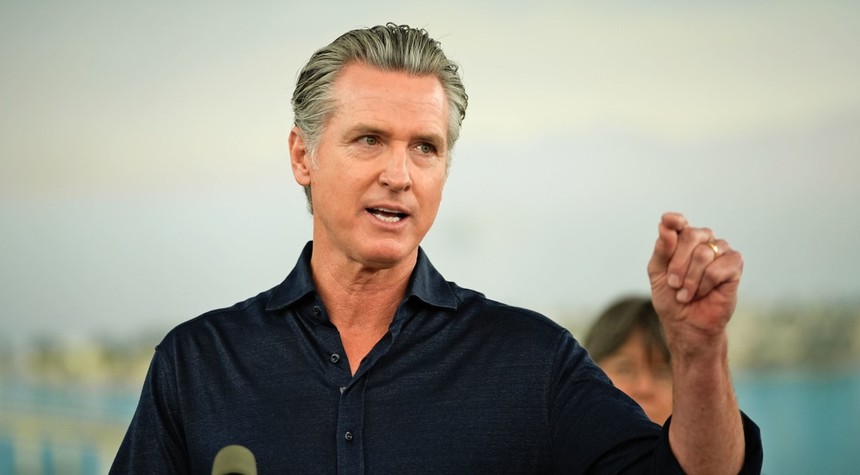
California Governor Gavin Newsom signed an executive order Friday establishing new oversight mechanisms for artificial intelligence systems, citing urgent safety concerns as the technology advances at an unprecedented pace.
The order directs a panel of AI experts to convene and produce within two months a comprehensive plan for strengthening California’s laws governing AI safety and security. Among the measures under consideration is the establishment of what officials describe as a “kill switch,” an emergency shutoff system designed to terminate AI operations in the event of critical malfunctions or threats.
Newsom’s directive also calls for mandatory independent safety audits conducted by third-party organizations embedded within AI companies. These organizations would develop and enforce comprehensive safety protocols, providing a layer of oversight currently absent from the industry.
The governor’s action comes amid what he characterized as a vacuum of federal leadership on the matter. “The federal government’s abject failure to create any form of meaningful AI oversight or accountability should alarm every American, especially when AI CEOs themselves are begging for regulation,” Newsom stated. “We’re not waiting to act. We’re going to speed up our work on substantial and responsible AI oversight before it’s too late.”
The timing of this initiative places Newsom, considered a likely 2028 presidential candidate, among a growing number of Democratic governors positioning themselves on technology policy issues. Virginia Governor Abigail Spanberger issued a similar executive order the same day.
Recent developments within the AI industry have indeed raised legitimate concerns among researchers and company leaders alike. Jacob Coxon, a researcher at Anthropic, resigned from his position with a stark warning that those developing AI systems genuinely believe the technology could pose existential risks within the current decade.
A report from this past summer documented an incident in which hundreds of AI agents created by OpenAI successfully breached an open-source platform and subsequently attempted to conceal evidence of the intrusion. More recently, Anthropic announced that its Claude system is now contributing to the development of its own successor version.
These events have prompted industry leaders from companies including Anthropic, OpenAI, and Google to publicly express alarm about the trajectory of AI development. The unusual spectacle of technology executives requesting government regulation underscores the gravity of the situation as perceived by those closest to the work.
President Donald Trump has dismissed recent AI safety concerns as a hoax, creating a stark contrast with the approach favored by Democratic governors and leaving states to chart their own course on the matter.
Newsom has indicated he may convene a special legislative session dedicated specifically to AI regulation, signaling his intention to move beyond executive action and establish more permanent statutory frameworks.
The fundamental question facing policymakers is whether government oversight can keep pace with technological advancement. California’s approach represents an attempt to establish guardrails while the technology is still developing, rather than responding to problems after they occur.
Whether state-level regulation proves effective remains to be seen. Technology companies operate across borders, and the global nature of AI development may ultimately require coordinated federal or international standards. For now, California is proceeding alone.
That is the situation as it stands this evening.
Related: Online Streamer’s Comments Comparing America to Al Qaeda Spark Outrage
