
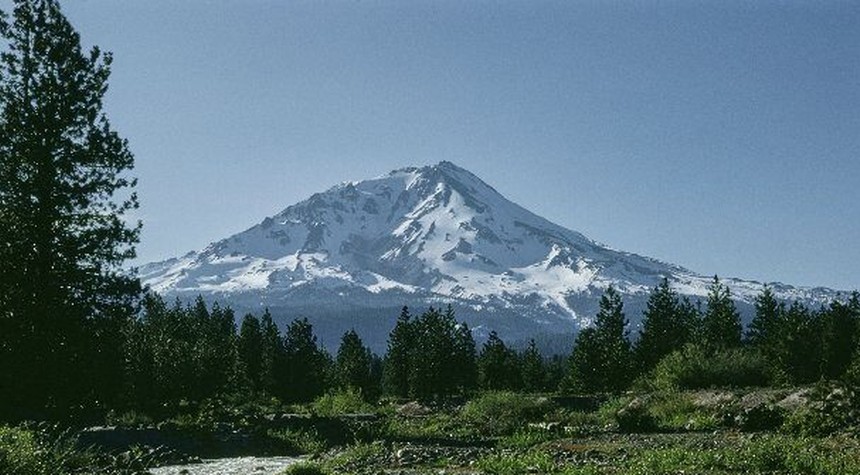
Three college students required emergency rescue from California’s Mount Shasta last week after relying on Google’s Gemini artificial intelligence chatbot to plan their climbing expedition, according to a United States Forest Service incident report.
The climbers, all lacking significant mountaineering experience, departed Saturday from the Clear Creek Trailhead on the mountain’s southeastern approach. Their plan called for establishing camp midway up the route before attempting to reach the summit early Sunday morning. Instead, the Siskiyou County Sheriff’s Office and Forest Service personnel responded to a distress call after the group encountered serious difficulties during their descent and spent an unplanned night exposed to the elements.
The Clear Creek route extends eight miles and ascends 6,500 feet in elevation. During late season conditions when snow has melted, the route does not require specialized equipment such as ice axes or crampons, making it among the more accessible paths to Shasta’s summit.
The students prepared for their expedition by consulting YouTube videos and querying Google’s Gemini AI system for guidance regarding route selection and provisions. They intended to navigate using the AllTrails mobile application.
Their first significant error occurred when they reached the summit Sunday evening, well beyond the mid-afternoon turnaround deadline that rangers recommend for safe descent. During the descent, the climbers mistook a digital suggestion line displayed in the AllTrails application for an established trail.
“Those are suggested routes, not trails,” explained Nick Meyers, the Forest Service’s lead climbing ranger and director of the Mount Shasta Avalanche Center.
The situation deteriorated rapidly. The mobile phone they were using for navigation lost power, and a backup battery pack failed to function properly. By Sunday night, the Forest Service report indicates the group had traveled significantly off-route and was forced to make camp in the open.
Rangers reached the stranded climbers Monday morning. They found the three exhausted, hungry, and dehydrated, with insufficient food and water supplies and inadequate clothing for overnight conditions. The group had also established their emergency camp in a prohibited area near a freshwater spring and left refuse and food waste at the site.
The artificial intelligence system had provided advice that contradicted established mountaineering practices. According to the Forest Service report, Google Gemini recommended simple carbohydrates over fats for sustenance during the climb, reasoning that fats “take too long to digest.” Experienced climbers understand that this guidance is precisely backward. The AI also advised the students that additional clothing layers would be unnecessary, leaving them dangerously exposed during the cold night.
Following their rescue, one climber acknowledged to rangers, “We relied too much on AI rather than our own critical thinking.” The Sheriff’s Office characterized their dependence on artificial intelligence as “a critical misstep.”
Meyers offered a more blunt assessment of the expedition: “They were totally blowing it in all regards.”
This incident represents at least the second time this season that AI-generated advice has created problems on Mount Shasta. Earlier in the summer, rangers discovered a woman camping in a clearly marked restricted zone on the mountain’s south side. When questioned, she explained that artificial intelligence had informed her camping was permitted in that location.
The incident raises important questions about the appropriate role of artificial intelligence in activities where lives depend on accurate information and sound judgment.
Related: Record Labor Day Gas Prices Strain Family Budgets as International Conflicts Limit Supply
