
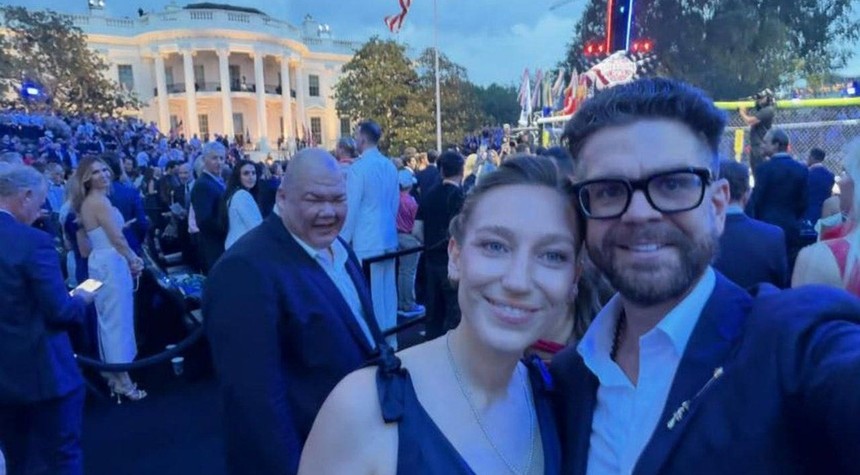
Jack Osbourne has responded to criticism regarding his attendance at the Ultimate Fighting Championship event held at the White House over the weekend, characterizing the negative reactions as unreasonable and bewildering.
The television personality addressed the controversy directly through a video posted to his YouTube channel, in which he shared examples of critical social media comments expressing disappointment in his decision to attend the event. Among the reactions he highlighted were statements such as “So disappointed” and “This is kinda devastating not gonna lie.”
Osbourne’s response was straightforward and unambiguous. He attended a sporting event, nothing more. He emphasized that his presence at the White House carried no political implications whatsoever. He was not announcing a candidacy for political office, endorsing any politician, or taking a position on matters of foreign policy. His sole purpose was to watch the UFC competition.
The former reality television star provided context for his attendance by explaining his lifelong involvement with combat sports. His interest began at the age of six with taekwondo training. During his late teenage years and early twenties, he traveled to Thailand to study Muay Thai. In his thirties, he pursued training in Brazilian jiu-jitsu. This background, he suggested, makes his interest in attending a premier mixed martial arts event entirely consistent with his personal history and interests.
The criticism Osbourne faced appears to reflect the increasingly polarized nature of American public discourse, where attendance at events associated with political figures becomes interpreted as political endorsement. This phenomenon has become more pronounced in recent years, as celebrities and public figures find their personal choices subjected to intense scrutiny and political interpretation.
The White House UFC event itself represented an unusual venue for a professional sporting competition, marking a departure from traditional White House entertainment and gatherings. However, for Osbourne, the location appears to have been secondary to the sporting spectacle itself.
His defense underscores a broader question facing Americans across the political spectrum: whether attending events at government facilities or in the presence of political figures necessarily constitutes political activity or endorsement. Osbourne’s position is clear. Watching athletes compete in a sport he has followed and practiced for decades does not equate to a political statement.
The intensity of the backlash he received, which he characterized using profanity to express his bewilderment, suggests that some segments of the public have difficulty separating attendance at sporting events from political affiliation. For Osbourne, the distinction remains obvious and important. He went to watch a fight, and the political interpretations others have imposed on that decision are, in his view, entirely misplaced.
As American society continues to navigate questions of celebrity, politics, and public perception, Osbourne’s experience serves as another example of how even seemingly apolitical activities can become flashpoints for controversy in the current cultural climate.
Related: Mississippi Police Under Scrutiny After Toddler Dies in Shoplifting Response
