
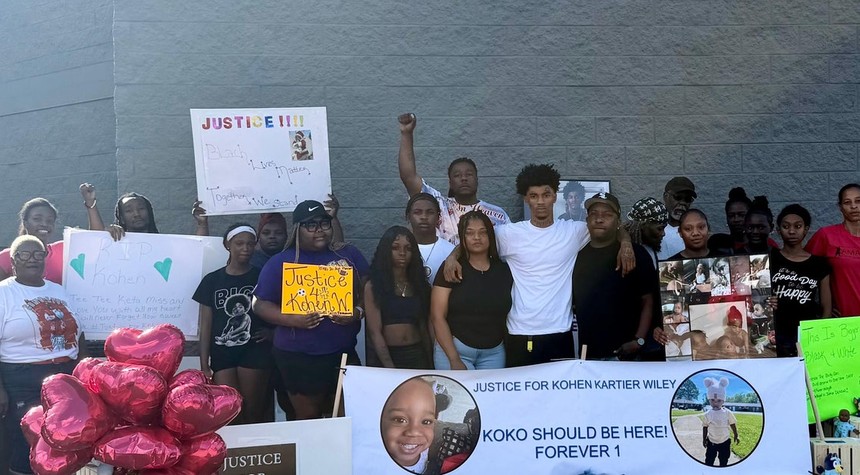
The fatal shooting of one-year-old Kohen Wiley by police responding to a shoplifting call in Senatobia, Mississippi has raised serious questions about the appropriate use of force and reignited long-standing tensions between law enforcement and the community.
The facts, as they are currently known, present a troubling picture. On Sunday, Senatobia police responded to a shoplifting report at a local Walmart. Officers encountered two women and a child leaving the store, entering a vehicle, and departing the scene. What happened next remains a matter of significant dispute.
According to the Mississippi Bureau of Investigation, officers attempted to stop the vehicle, but the driver allegedly drove in the direction of officers, nearly striking one. An officer discharged his weapon, and the vehicle fled. The child was struck by gunfire and later died.
Vellesiya Wiley, the child’s mother, has provided a markedly different account. In statements made public this week, she maintains that her friend, who was driving, was not heading toward officers but rather in the opposite direction. She describes seeing officers approach the vehicle with weapons drawn after her friend accidentally struck another car while backing up. Crucially, she states that she raised her child up to make officers aware of his presence in the vehicle before the shots were fired.
The mother also disputes that any shoplifting occurred, asserting her belief that the items in question, reportedly diapers, had been purchased.
The officer involved has been placed on administrative leave while the investigation proceeds. For many in this town of 8,000 residents, that response is insufficient. Protests have erupted, and community leaders are demanding greater accountability from local law enforcement.
The broader context cannot be ignored. This incident represents the latest in what community members describe as a pattern of troubling police encounters in recent years. The death has drawn national attention, with civil rights leaders pointing to it as another instance of disproportionate force being applied in situations involving African Americans.
From a tactical standpoint, policing experts have been unequivocal in their assessment. Ian Adams, who teaches criminal justice at the University of South Carolina, stated plainly that shooting into a moving vehicle represents poor practice that modern policing standards explicitly discourage. The presence of other occupants in vehicles makes such actions particularly dangerous, a fact tragically illustrated in this case.
The fundamental questions here are straightforward. Was the use of deadly force justified under these circumstances? Were proper protocols followed? Could this death have been prevented?
These questions demand answers, not merely for this grieving family, but for a community seeking assurance that its police force operates within appropriate bounds. The investigation by the Mississippi Bureau of Investigation continues, and the facts it uncovers will be critical in determining what accountability, if any, is warranted.
What remains undisputed is that a one-year-old child is dead following a police response to an alleged shoplifting incident. Whether that response was justified or represented a catastrophic failure of judgment is precisely what must be determined. The community of Senatobia, and indeed the nation watching this case unfold, deserves a thorough and transparent accounting of what transpired that Sunday afternoon.
Related: North Dakota Joins Florida and Texas as Model for Conservative Tax Policy
