
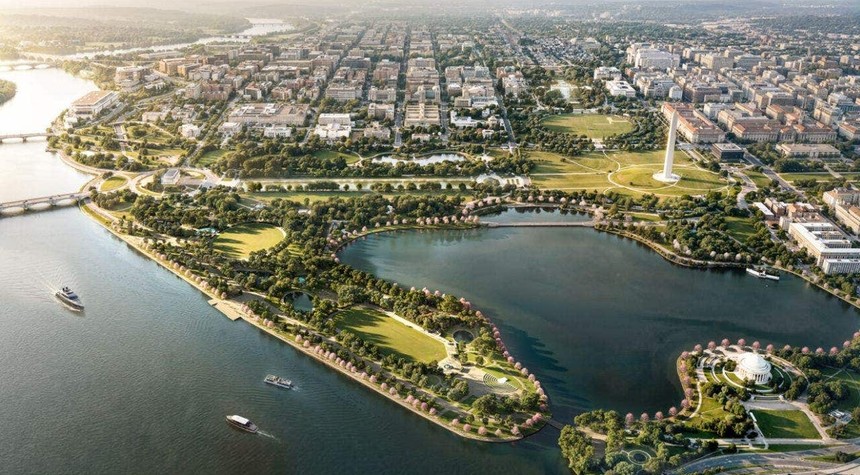
President Donald Trump announced Friday his selection of West Potomac Park as the location for a National Garden of American Heroes, describing the project as part of broader efforts to transform the nation’s capital into what he termed the safest and most beautiful capital in the world.
The announcement, made through social media, outlined plans to convert what Trump characterized as barren waterfront property along the Potomac River into an exhibition space featuring statues of notable Americans from various fields of achievement.
According to the president’s statement, the garden will include representations of the nation’s founders, military leaders, religious figures, civil rights pioneers, athletes, artists, and entertainers. Trump indicated the project serves as one of several initiatives marking the approaching 250th anniversary of American independence in 2026.
West Potomac Park, situated along the Potomac River in the heart of Washington, currently consists largely of open green space. The transformation Trump envisions would add landscaping and statuary to create what he described as a world-class public space intended to educate and inspire visitors from across the nation and around the globe.
The National Garden represents the latest in a series of ambitious infrastructure and beautification projects the Trump administration has pursued in the District of Columbia. The most prominent of these remains the White House ballroom expansion, which is currently under construction. The administration has also proposed modifications to other existing structures and public spaces throughout the capital.
Trump has consistently emphasized classical design principles and traditional aesthetics in his vision for federal architecture and public spaces. This approach represents a departure from the modernist and contemporary styles that have characterized much federal construction in recent decades.
The West Potomac Park location places the proposed garden in close proximity to several of the nation’s most visited monuments, including the Lincoln Memorial, the Martin Luther King Jr. Memorial, and the Korean War Veterans Memorial. The site’s position along the Tidal Basin would make it accessible to the millions of tourists who visit the National Mall area annually.
Details regarding the specific individuals to be honored in the garden, the timeline for construction, and the projected cost of the project were not included in the president’s announcement. Questions regarding the selection process for determining which Americans will be represented also remain unanswered at this time.
The administration has framed the project as both a celebration of American achievement and an educational resource for future generations. Whether the garden will include interpretive materials or educational programming beyond the statuary itself has not yet been clarified.
As with other major construction projects in the nation’s capital, the National Garden will likely require approval from various federal agencies and oversight bodies responsible for development in Washington. The timeline for securing necessary permissions and beginning actual construction work remains unclear.
Related: FAA Faces Congressional Scrutiny Over Flight Attendant Staffing Rules for Major Airlines
