
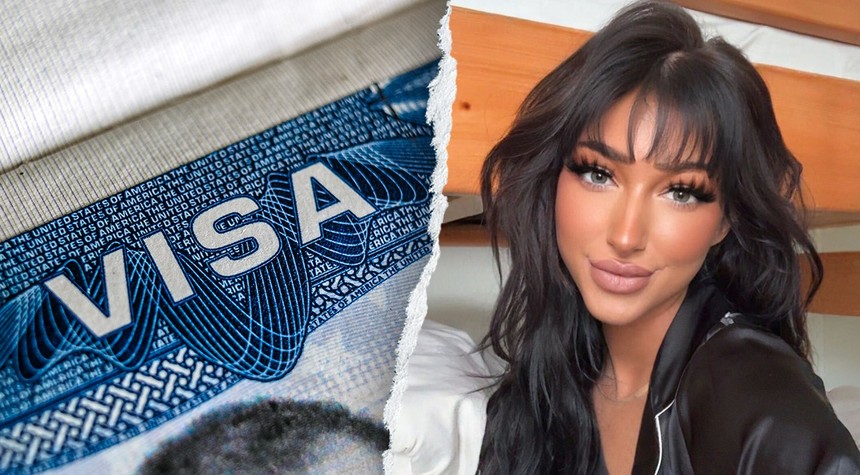
A former adult content creator who departed the industry after a religious conversion has entered the national debate over immigration policy, arguing that adult entertainment work should not qualify individuals for extraordinary ability visas.
Nala Ray, who achieved top-tier status on the subscription platform OnlyFans before leaving two years ago following her embrace of Christianity, has stated that adult content creation fails to meet the threshold for what immigration law defines as extraordinary ability deserving of special visa consideration.
The issue has emerged as content creators, including those producing adult material, increasingly seek O-1 visas to work in the United States. These visas are designated for individuals who possess extraordinary ability in the sciences, arts, education, business, or athletics, according to U.S. Citizenship and Immigration Services.
Ray drew a clear distinction in her assessment of different types of digital content creation. While she opposes visa approval for adult content producers, she acknowledged the legitimacy of other forms of social media work.
“OnlyFans work and adult content is not real work and shouldn’t be allowed, even to cross our borders to get even more infiltrated into our society,” Ray stated. She added that she does not view adult content as beneficial work.
However, Ray expressed support for content creators in other fields. “I do think that other people from other countries who do come to do real work on social media here is a good thing,” she said, noting that social media work can require genuine effort and produce positive outcomes.
The O-1 visa category requires that applicants demonstrate a record of extraordinary achievement recognized nationally or internationally. A U.S. employer, U.S. agent, or foreign employer through a U.S. agent must file on behalf of the applicant with supporting evidence.
Ray maintained an unequivocal position on whether adult content creators should receive such visas. “I absolutely would advocate for a ban on that. I think it’s unethical to think that OnlyFans work is actual work and doing anything for our country,” she said.
She further argued that financial success alone does not justify visa approval. “A lot of OnlyFans creators do make a lot of money, but that doesn’t necessarily mean that it’s going toward the good of our country,” Ray noted.
Speaking from her experience as a top performer on the platform, Ray described what she views as the destructive nature of the industry. “OnlyFans destroys relationships, it destroys friendships,” she said. “People have changed so much in society, both men and women, because of the effects of OnlyFans and doing adult content.”
Ray also addressed the personal costs of maintaining success in the industry, stating that she felt compelled to take risks that were not always prudent.
The debate over whether adult content creation constitutes extraordinary ability under immigration law touches on broader questions about how American society defines valuable work and which activities merit special consideration in visa applications. As digital platforms continue to reshape traditional employment categories, immigration policy faces new challenges in determining which forms of online work qualify for extraordinary ability status.
Related: President Trump Takes Aim at Cuba Through Sweeping Tariff Authority
