
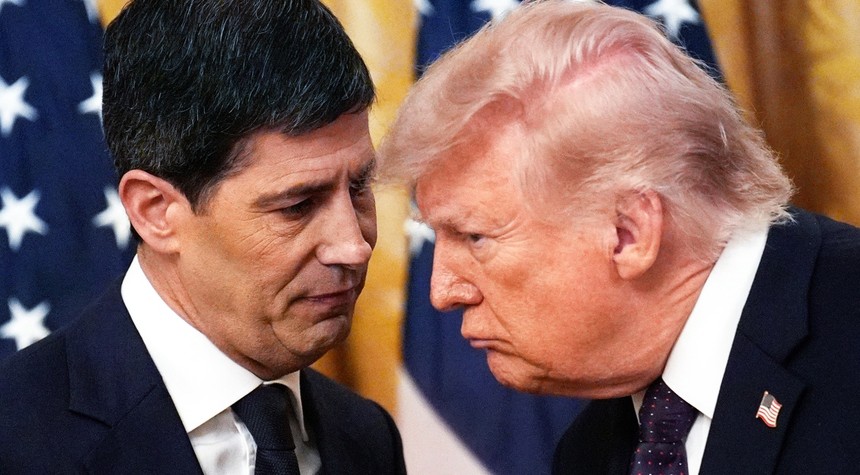
The relationship between President Donald Trump and Federal Reserve Chairman Kevin Warsh appears to be entering a more contentious phase as the central bank prepares to announce its latest policy decision Wednesday.
Trump has escalated his public calls for interest rate reductions in recent weeks, despite inflation data that continues to run well above the Federal Reserve’s target. The president’s increasingly vocal stance on monetary policy raises familiar questions about the independence of the nation’s central banking system.
When Warsh assumed office in May, Trump offered straightforward guidance to his hand-picked Fed chairman. The president advised Warsh to focus solely on the job itself, without regard to political considerations or outside opinions. That measured approach marked a notable departure from Trump’s previous relationship with former Fed Chairman Jerome Powell, whom the president frequently criticized during his first term.
Those early restraints now appear to be loosening. Trump has made a series of public statements advocating for lower interest rates, growing more emphatic with each declaration. At a White House event in late July, the president described Warsh as performing admirably but characterized the broader Fed board as politically motivated and resistant to rate reductions.
The president’s remarks have grown more pointed. Earlier this month, following an inflation report that showed consumer prices rising at a 3.4 percent annual rate, Trump argued that the United States should maintain the world’s lowest interest rates. He suggested rates should fall to one percent or even half a percent, rather than the current level near four percent.
Trump has framed the issue in terms of national competitiveness and fiscal responsibility. Higher interest rates increase the cost of servicing the national debt, a concern the president has emphasized repeatedly. He has described lower rates as both an economic imperative and a matter of national strength.
The Federal Reserve faces a difficult decision. Market observers placed odds above 90 percent on Tuesday that the central bank would raise interest rates at Wednesday’s meeting, based on persistent inflation readings. The Fed has not increased rates since 2023, during the Biden administration, when the economy grappled with significantly higher inflation levels.
The central bank’s official target for inflation remains two percent, well below the current rate. This gap between target and reality presents Fed policymakers with an uncomfortable choice: maintain current rates despite elevated inflation, potentially drawing presidential criticism, or raise rates to combat price increases and risk provoking a direct confrontation with the White House.
Kevin Hassett, chairman of the National Economic Council and a former candidate for the Fed position, acknowledged that Trump would likely respond to any significant policy move. While emphasizing respect for Fed independence, Hassett made clear the president holds firm opinions about appropriate monetary policy.
Economists have noted that various factors continue to drive inflationary pressures, complicating the Fed’s policy calculus. The situation places Chairman Warsh in a position that will test both his economic judgment and his ability to maintain institutional independence under pressure from the president who appointed him.
And that is the way it is.
Related: Texas Family Files Wrongful Death Lawsuit Over Denied Abortion Care
