
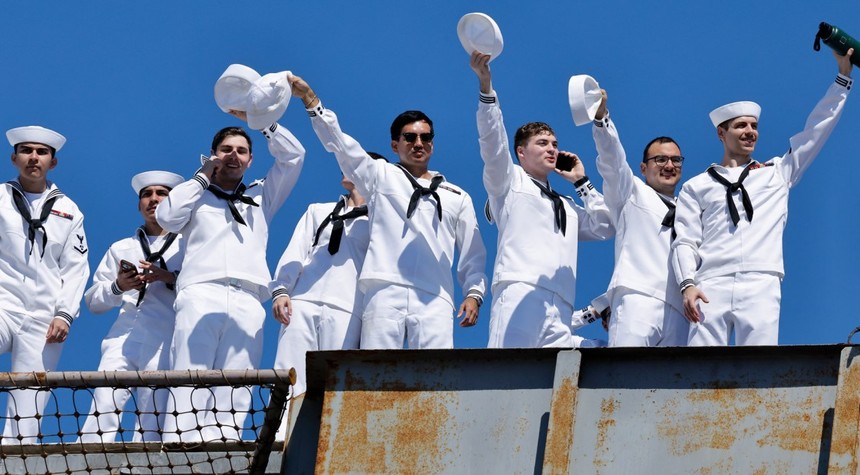
The USS Abraham Lincoln arrived in San Diego Bay Thursday morning, concluding 322 days at sea in what stands as one of the longest maritime deployments in United States military history. The aircraft carrier’s return brought relief to thousands of family members and renewed attention to questions about the sustainability of such extended operations.
More than 5,000 crew members lined the portside decks as the vessel entered the bay, many waving to loved ones gathered below at Naval Air Station North Island in Coronado. The scene marked the end of a deployment that tested the limits of both equipment and personnel.
Captain Dan Keeler, the commanding officer, characterized the moment as resembling both Christmas Eve and the final day of the school year. He noted that some crew members are merely 18 years old, yet have performed with distinction throughout the grueling deployment.
Among the most poignant reunions will be 64 parents meeting their newborn children for the first time. Sailor Brent Ledbetter, whose wife served as an air traffic control officer aboard the Lincoln before being relieved due to pregnancy, expressed his eagerness to finally hold his infant son after months of watching him grow through photographs and videos.
The Lincoln deployed as part of Operation Epic Fury, a mission the Defense Department described in February as focused on destroying Iranian offensive missiles, missile production facilities, naval assets, and security infrastructure. The carrier spent 286 consecutive days at sea without a port call, the second-longest such stretch since the Vietnam War era. The total deployment exceeded 300 days overseas.
The operational tempo proved demanding. The Lincoln and its air wing dropped more than 1,145 weapons during the deployment, targeting 1,463 objects according to a mural painted by crew members to commemorate the mission. Commander Cody Forsythe, an air operations officer, indicated such murals have been rare since the 1940s, suggesting the historical significance crew members attach to this deployment.
The extended mission generated national scrutiny following reports of supply shortages and at least eight suicide attempts aboard the vessel. These troubling accounts raised questions about crew welfare during prolonged deployments, particularly as the Navy seeks to maintain a persistent presence in strategically vital regions.
Crewmember Isabella Norfleet acknowledged the importance of maintaining morale during such demanding circumstances, noting efforts to leave a lasting positive impact aboard the vessel.
The Lincoln’s deployment duration was surpassed only by the USS Gerald R. Ford, which completed a 326-day deployment earlier this year. These extended operations reflect the operational demands facing the Navy as it balances global commitments against the human costs of keeping sailors away from home for nearly a year.
The families who gathered hours before the carrier’s arrival Thursday morning demonstrated the personal sacrifice military service demands. Their patience and support enabled the successful completion of a mission that, by any measure, required extraordinary dedication from every sailor aboard.
As the Lincoln begins its period in port, the Navy will undoubtedly assess lessons learned from this historic deployment, particularly regarding the limits of extended operations and their impact on readiness and retention.
Related: Children’s Network Nickelodeon Faces Questions Over Parent Guide Content
