
The United Nations Security Council convenes Monday evening to vote on President Donald Trump’s comprehensive peace plan for Gaza, a proposal that seeks to transform the war-ravaged territory but faces significant diplomatic obstacles from global powers uncertain about its long-term viability.
The vote, scheduled for 5 p.m. Eastern Time, requires nine affirmative votes from the fifteen-member council to pass. However, the plan faces the prospect of an outright veto from either China or Russia, both of which hold permanent seats with veto power.
The proposal represents the second phase of the president’s twenty-point peace initiative first announced in September. Phase one successfully implemented a prisoner and hostage exchange along with a ceasefire that has largely held, despite accusations of violations from both Israeli and Hamas forces. This fragile peace now hangs in the balance as diplomats debate whether the American plan can provide the lasting solution that has eluded the Middle East for generations.
At the heart of the proposal lies the establishment of a “Board of Peace,” to be headed by President Trump himself, which would temporarily govern Gaza. Additionally, an International Stabilization Force would assume control from Israeli Defense Forces currently occupying portions of the territory.
“I’m optimistic we’re going to see the resolution passed,” stated Mike Huckabee, the United States ambassador to Israel, in remarks Sunday. “I do believe that we are on the brink of a historic realignment in the Middle East because President Trump has done things that I don’t think anyone else ever could have pulled off in bringing these countries together.”
The path forward remains treacherous. Israeli Prime Minister Benjamin Netanyahu, facing pressure from far-right coalition partners, has already denounced aspects of the resolution that outline a future Palestinian state. Hamas has similarly warned against the American proposal, casting doubt on whether the parties most central to any lasting peace can find common ground.
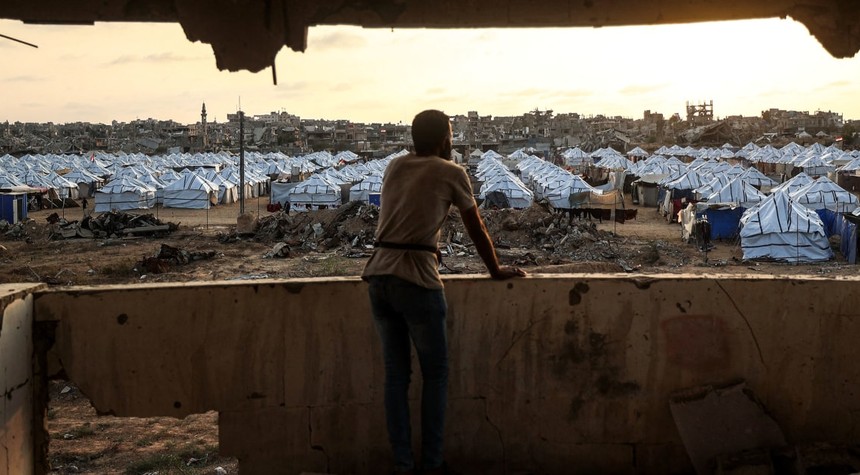
The humanitarian situation on the ground adds urgency to these diplomatic deliberations. Palestinians in Gaza continue to suffer from severe hunger, and recent flooding at the onset of winter has compounded their misery. Local health officials report that at least sixty-nine thousand people have been killed in Gaza during Israel’s military offensive, the majority of them women and children. Israel launched this campaign following Hamas’ October 7, 2023, terror attack, which claimed twelve hundred lives and resulted in the kidnapping of another two hundred fifty individuals.
The draft resolution has undergone revisions to address concerns from Security Council members. The current version states that after the Palestinian Authority has “faithfully carried out and Gaza redevelopment has advanced, the conditions may be in place for a credible pathway to Palestinian self-determination and statehood.” This language represents a compromise from earlier drafts that made no reference to Palestinian statehood.
The American plan has garnered support from several Arab states, including Qatar, Egypt, the United Arab Emirates, Saudi Arabia, and Jordan, as well as Turkey, Indonesia, and Pakistan. However, of these nations, only the United States and Pakistan hold Security Council seats, and Pakistan, as a non-permanent member, does not possess veto power.
The outcome of Monday’s vote will determine whether the international community can unite behind an American-led effort to bring stability to one of the world’s most volatile regions, or whether competing interests and longstanding grievances will once again prevent meaningful progress toward peace.
Related: FBI Captures Man Accused of Damaging U.S. Attorney Alina Habba’s Office
