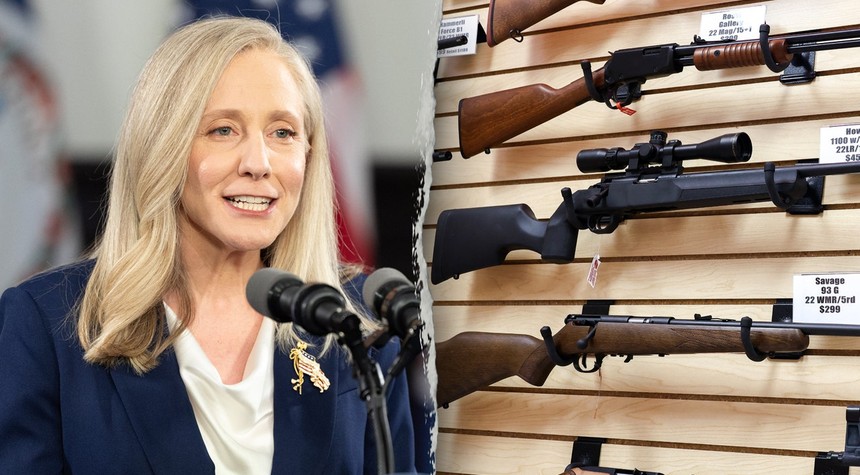
More than 160 years after West Virginia separated from Virginia during the Civil War, the two states find themselves once again on opposite sides of a fundamental divide. This time, the battleground is gun policy.
Virginia Democrats have advanced a comprehensive gun-control package to Governor Abigail Spanberger’s desk, while across the border in Charleston, West Virginia lawmakers are considering legislation that would permit residents to lawfully obtain machine guns. The contrasting approaches underscore how dramatically firearms policy has diverged along what was once a Confederate boundary line.
The Virginia legislation, authored by state Senator Saddam Salim of Dunn Loring, represents one of the most sweeping firearms restrictions proposed in the Commonwealth in recent years. Governor Spanberger has indicated she will review the measure when it arrives at her desk next week.
In a statement, Spanberger’s office emphasized her dual perspective as both a mother and former federal law enforcement officer. “As the mother of three daughters in Virginia public schools and a former federal law enforcement officer who carried a gun every day, Governor Spanberger knows how important it is to make sure kids and families are safe,” the statement read.
The governor’s office added that she appreciates “the efforts of legislators and advocates to address gun violence in Virginia communities” and looks forward to reviewing all legislation that reaches her desk. When asked directly whether she intends to sign Senator Salim’s bill, the governor’s office did not provide a response.
The political landscape in both states has shifted considerably in recent years, contributing to these divergent policy directions. West Virginia Republicans now command overwhelming supermajorities in both legislative chambers, holding a 31-2 advantage in the state Senate and a 91-9 margin in the House of Delegates. The Mountain State stands as one of only two states in the nation, alongside Oklahoma, without a single Democrat-majority county.
Virginia, by contrast, has seen Democrats consolidate their control of state government in recent election cycles. This political realignment has enabled the party to advance firearms restrictions that would have been unthinkable during the Commonwealth’s more conservative past.
The debate over firearms policy continues to serve as one of the most reliable indicators of the broader ideological gulf separating red and blue America. What makes the Virginia-West Virginia comparison particularly striking is the shared history and geographic proximity of these two states. They are divided not by vast distances or dramatically different cultures, but by fundamentally different visions of the proper relationship between citizens, firearms, and government authority.
As these legislative efforts move forward, they will be watched closely by advocates on both sides of the gun debate as test cases for what is politically achievable in states with unified party control. The outcomes in Richmond and Charleston may well preview similar battles in other state capitals across the nation.
Related: Oakland Resident Accused of Attacking TSA Officers and Police at Dallas Airport