
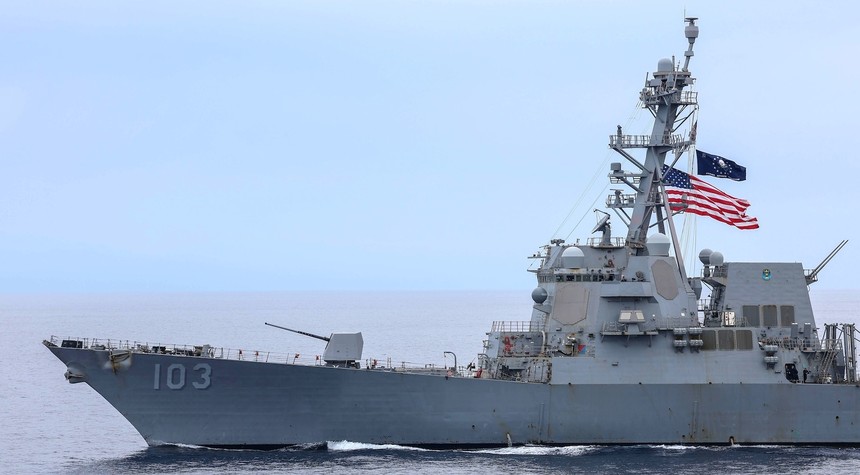
Two United States Navy vessels collided in the Caribbean Sea on Wednesday during a routine resupply operation, resulting in minor injuries to two personnel, according to military officials.
The incident involved the Arleigh Burke-class guided missile destroyer USS Truxtun and the Supply-class fast combat support ship USNS Supply. Both vessels were conducting what the Navy calls a replenishment-at-sea when the collision occurred Wednesday afternoon.
Colonel Emmanuel Ortiz, a spokesman for U.S. Southern Command, confirmed the incident in a statement released Thursday. “Two personnel reported minor injuries and are in stable condition,” Ortiz said, adding that both ships continue to sail safely following the collision. The incident remains under investigation.
Military officials have not disclosed whether the injured personnel were stationed aboard the destroyer, the supply ship, or divided between both vessels. The nature of their injuries has not been detailed beyond their characterization as minor.
Replenishment-at-sea operations represent one of the Navy’s most challenging maneuvers. The procedure requires two ships to sail in parallel formation at close proximity while maintaining matching speed and course. Supplies are then transferred between vessels via cables fired from one ship to the other, allowing the Navy to resupply ships without requiring them to return to port.
Such collisions represent uncommon occurrences within the United States Navy. The last reported collision involving Navy vessels took place on February 12, underscoring the rarity of such incidents despite the inherent risks involved in close-quarters naval operations.
The USS Truxtun, designated DDG-103, belongs to the Navy’s Arleigh Burke class of guided missile destroyers, which form the backbone of the fleet’s surface warfare capabilities. These vessels carry advanced radar systems and are equipped with Tomahawk cruise missiles and other sophisticated weaponry.
The USNS Supply, designated T-AOE-6, serves as a fast combat support ship responsible for keeping the fleet supplied with fuel, ammunition, and provisions during extended deployments. These supply vessels prove essential to maintaining naval operations far from home ports.
U.S. Southern Command oversees military operations throughout Central and South America, as well as the Caribbean region. The command’s area of responsibility includes monitoring drug trafficking routes and providing humanitarian assistance when required.
The investigation into Wednesday’s collision will likely examine multiple factors, including weather conditions, sea state, communications between the vessels, and adherence to established protocols for replenishment operations. Such inquiries typically take several weeks or months to complete as investigators gather evidence and interview crew members from both ships.
Neither vessel appears to have sustained damage severe enough to compromise their seaworthiness, as both continue normal sailing operations. The Navy has not indicated whether either ship will require port visits for damage assessment or repairs.
Related: Joe Rogan Praises Senator Fetterman’s Independence Despite Party Backlash
