
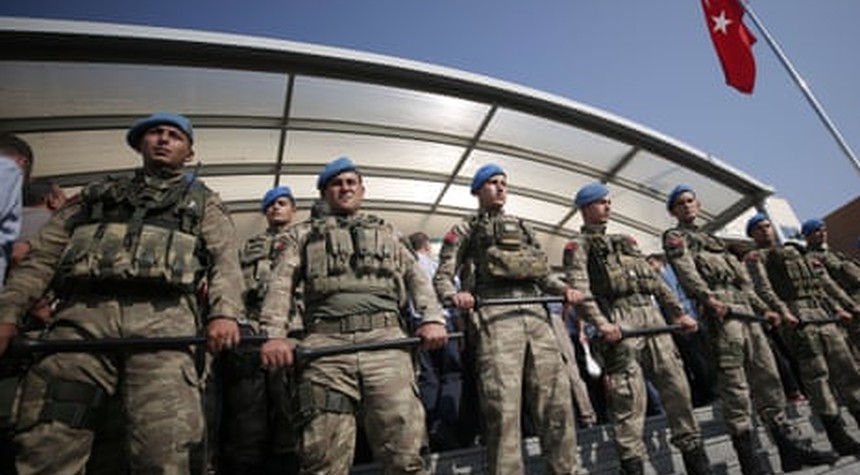
The Israeli government has effectively blocked Turkey’s participation in the planned 5,000-strong stabilization force for post-war Gaza, highlighting growing tensions between the two regional powers. This development underscores Israel’s firm stance on maintaining control over security arrangements in the aftermath of the conflict.
Secretary of State Marco Rubio emphasized that Israel’s approval of participating nations is a fundamental requirement for the multinational force, which aims to prevent a security vacuum during Gaza’s reconstruction phase. While Turkey expressed willingness to contribute troops, Israeli officials have clearly signaled their opposition, citing concerns over Turkish President Recep Tayyip Erdogan’s close ties to Hamas and the Muslim Brotherhood.
The exclusion of Turkey, despite its status as a guarantor of the Trump 20-point ceasefire agreement and its reputation for military capability, reveals the complex diplomatic challenges facing post-war Gaza planning. Egypt is expected to lead the stabilization force, with other Muslim-majority nations like Indonesia and the United Arab Emirates seeking United Nations Security Council mandate for the operation.
A U.S.-led Civil-Military Coordination Centre (CMCC) has been established in Kiryat Gat, Israel, incorporating British, French, Jordanian, and Emirati advisers. Vice President JD Vance inaugurated this facility, which will oversee both security operations and humanitarian aid coordination, though key aid crossings remain non-operational.
The stabilization force’s primary objectives include Hamas disarmament and securing a transitional Palestinian government. Prime Minister Benjamin Netanyahu has explicitly rejected Palestinian Authority involvement in post-war Gaza governance, though Palestinian factions recently agreed to establish an independent technocratic committee to administer the territory.
Tensions between Turkey and Israel have manifested in practical obstacles, with an 81-member Turkish disaster response team currently stranded at the Egyptian border, awaiting Israeli permission to enter Gaza with life-detection equipment and search dogs. President Erdogan has called for increased U.S. pressure on Israel, including sanctions and arms sales restrictions, to ensure compliance with the Trump plan.
Secretary Rubio’s statement opposing any role for the UN Relief and Works Agency (UNRWA) in Gaza, which he characterized as a “Hamas subsidiary,” sets up potential conflicts with European allies, UN leadership, and the International Court of Justice. This position reflects the administration’s commitment to preventing Hamas from maintaining influence in post-war Gaza while ensuring regional stability through carefully selected international partners.
The careful vetting of participating nations in the stabilization force demonstrates Israel’s determination to maintain security control while rebuilding Gaza under terms that prevent Hamas from reconstituting its military capabilities. This strategic approach prioritizes Israeli security concerns while balancing international participation in the reconstruction effort.
Related: Treasury Sanctions Colombian President Petro Over Drug Cartel Inaction
