
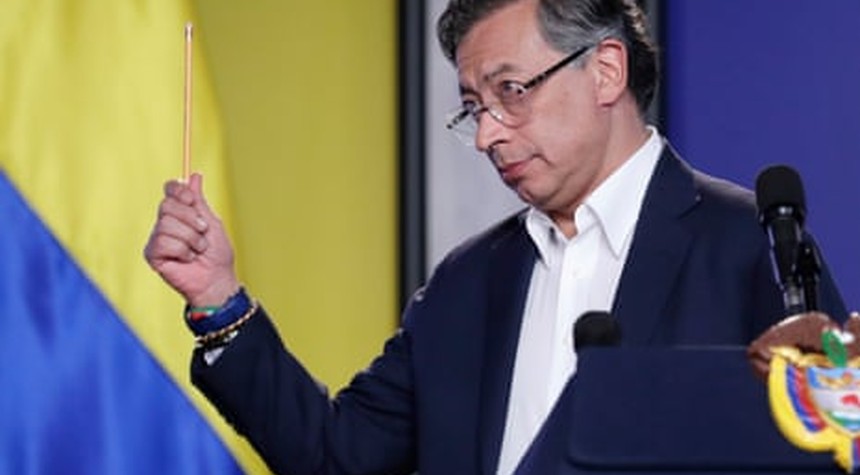
The United States Treasury Department has taken decisive action against Colombian President Gustavo Petro, implementing sanctions over his administration’s demonstrable failure to combat drug cartels operating within Colombia’s borders.
Despite Petro’s protestations, the facts speak volumes. Under his leadership, Colombia has witnessed an unprecedented expansion of coca cultivation, with cartels operating with increasing impunity. The Treasury Department’s decision reflects a commitment to protecting American interests against the rising tide of narcotics flooding across our borders.
Treasury Secretary Scott Bessent outlined the administration’s position with clarity: Petro’s government has systematically failed to implement effective counter-narcotics strategies, essentially providing tacit approval for cartel operations. This dereliction of duty directly threatens American security interests and public health.
The sanctions, while significant, are hardly unprecedented. Petro now joins a select group of world leaders, including those from Russia, Venezuela, and North Korea, who have faced similar consequences for actions contrary to American interests and international security.
The Treasury’s action extends beyond Petro himself, targeting key figures in his inner circle, including his wife, son, and Interior Minister Armando Benedetti. This comprehensive approach demonstrates the administration’s understanding that narco-corruption often operates through family and political networks.
Petro’s response has been predictably defensive, attempting to deflect attention by citing cocaine seizure statistics and making inflammatory accusations about American foreign policy. However, these claims ring hollow when examined against the backdrop of Colombia’s deteriorating drug enforcement situation.
The timing of these sanctions follows a pattern of increasingly antagonistic behavior from Petro’s administration, including his participation in anti-American protests and his inflammatory rhetoric regarding U.S. military operations in the Caribbean. His attempts to portray himself as a victim of American overreach ignore the fundamental responsibility of his government to control illegal drug production and trafficking.
White House spokeswoman Anna Kelly delivered an unequivocal message: Colombia must take immediate action to shut down these “killing fields,” or face American intervention. This stance represents a return to strong leadership in international drug enforcement policy.
The sanctions freeze any U.S.-based assets of the targeted individuals and prohibit American citizens from conducting business with them. These measures serve as a powerful reminder that the United States will not hesitate to use economic tools to combat the international drug trade and those who enable it through inaction or complicity.
This development marks a crucial turning point in U.S.-Colombian relations, demonstrating that ideological alignment with drug cartels and anti-American rhetoric will not go unchallenged. The message is clear: nations that fail to combat drug trafficking will face serious consequences, regardless of their political standing.
Related: Trump Hits Russian Oil Giants With Sanctions After Failed Peace Talks
