
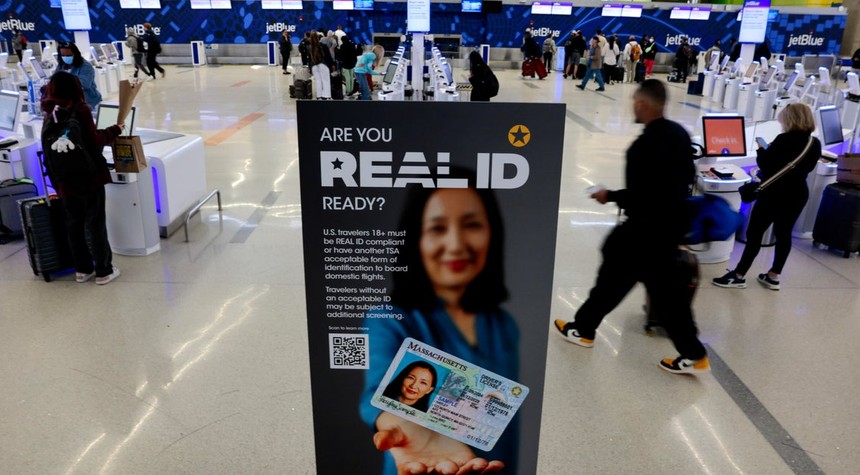
The Transportation Security Administration will begin charging travelers without Real ID-compliant identification a $45 fee starting February 1, marking a significant shift in how the agency handles passengers who arrive at airport checkpoints without proper documentation.
The new fee applies to passengers who do not present a Real ID or other acceptable forms of identification, such as a passport or Department of Homeland Security trusted traveler card. Rather than denying these travelers access to their flights, the TSA will subject them to additional identity screening through a program called ConfirmID.
A Real ID is a federally compliant state driver’s license, learner’s permit, or nondriver identification card, distinguished by a black or gold star in the upper right corner. The enhanced identification standards were established following the September 11 attacks as part of broader national security reforms.
Under the ConfirmID program, passengers without compliant identification will answer a series of questions about themselves to verify their identity. The fee-based system validates a passenger’s identity for ten days, according to the TSA. The verification process varies from airport to airport.
Adam Stahl, senior official performing the duties of deputy administrator for TSA, addressed the new program in a statement issued January 15. “TSA ConfirmID will be an option for travelers that do not bring a Real ID or other acceptable form of ID to the TSA checkpoint and still want to fly,” Stahl said.
The TSA announced the fee structure in December, emphasizing that it applies to all passengers who do not present acceptable identification but still wish to board their flights. The agency continues to encourage all travelers to obtain Real IDs to avoid potential complications.
“To avoid delays or missed flights, all travelers should obtain a Real ID or another acceptable form of identification before heading to the airport,” Stahl advised.
The new fee represents a departure from longstanding TSA policy. The agency has historically allowed passengers who lost their identification or arrived without proper documentation to fly after undergoing alternative verification procedures. Those services were provided at no additional cost.
Julian Kheel, chief executive officer and founder of Points Path, a provider of trip insights, explained the change. “It’s a longstanding policy. What has changed here is that they are now charging for it,” Kheel said.
Aviation experts have noted that while the ConfirmID program provides a solution for travelers without Real IDs, it could slow the screening process for all passengers at security checkpoints. The additional questioning and verification steps required for ConfirmID users may create bottlenecks during peak travel periods.
The TSA is urging travelers to pay the fee online before arriving at the airport. The agency has partnered with third-party providers in the private sector to facilitate payment options. Passengers without acceptable identification should visit tsa.gov/ConfirmID before departing for their trip. Those who pay online will receive a receipt by email, which must be presented to TSA officers at airport security checkpoints.
The implementation of the fee comes as federal agencies continue working to ensure full compliance with Real ID standards across all states and territories. The deadline for mandatory Real ID compliance has been extended multiple times since the program’s inception, but enforcement measures are now proceeding as planned.
Related: Uber Announces Initiative to Supply Real-World Driving Data to Robotaxi Partners
