
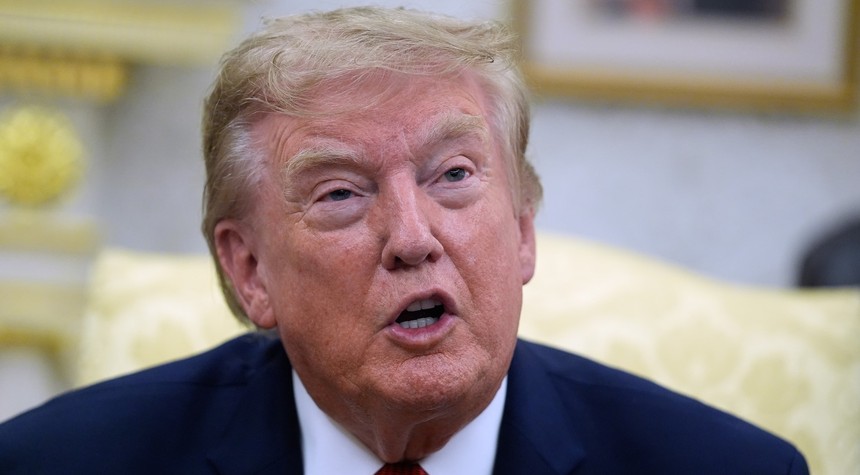
President Donald Trump announced late Tuesday evening that he would delay the implementation of sweeping 50 percent tariffs on Canadian goods, citing progress toward a comprehensive trade agreement between the United States and Canada.
The tariffs, which were scheduled to take effect at one minute past midnight Wednesday morning, would have affected dozens of product categories ranging from hockey equipment to wine. The president’s decision to pause the measures for three days came after what he described as productive discussions with Canadian Prime Minister Mark Carney.
“I have paused the 50 percent tariffs against Canada that were scheduled to kick in tomorrow morning for a three day period, based on the fact that Canada and the U.S.A., subject to the finalization of documents, have a deal,” the president stated in a social media announcement Tuesday night.
Speaking to reporters Wednesday, Trump characterized his conversation with Prime Minister Carney as “very good” and indicated that significant concessions had been secured for American agricultural interests. According to the president, Canadian tariffs on American farm products would be eliminated entirely under the proposed agreement.
“The tariffs will be non-existent for our farmers. Our farmers were paying tremendous tariffs into Canada. And those tariffs are going to be totally eviscerated down to zero,” Trump stated.
The United States Trade Representative’s office provided additional details about the framework of the emerging agreement. The deal would reportedly include comprehensive market access for American goods, economic security commitments, digital trade alignment, and provisions designed to protect American workers and markets while maintaining the economic partnership with Canada.
However, the Canadian government’s response suggested that while progress has been made, the agreement remains incomplete. Prime Minister Carney acknowledged “substantial progress” but emphasized that important work continues. His statement noted that Canada remains focused on building a stronger, more independent, and competitive domestic economy.
When questioned about whether the agreement would address existing tariffs on Canadian steel and aluminum, the president indicated those matters remain under consideration.
The president also suggested that the deal might include provisions for reviving the Keystone Pipeline project, though details on that aspect of the negotiations remain unclear. The pipeline project was previously canceled, making any potential revival a significant development in North American energy policy.
The three-day pause provides negotiators from both nations time to finalize documentation and resolve remaining points of contention. The temporary nature of the delay underscores the urgency both sides face in reaching a final agreement before the tariffs would automatically take effect.
This development represents a potentially significant shift in trade relations between the two nations, which share the world’s longest international border and maintain deeply intertwined economies. American farmers, manufacturers, and consumers have closely watched these negotiations, as the outcome will have substantial implications for prices, market access, and economic growth on both sides of the border.
The coming days will prove critical as negotiators work to transform this preliminary agreement into a finalized deal that both nations can accept.
Related: Massachusetts Authorities Seek Woman in Death of Off-Duty Police Officer
