
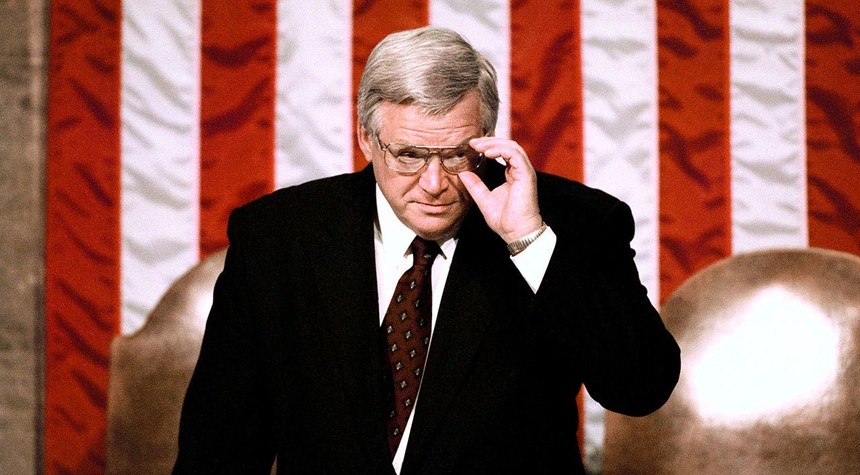
Former Speaker of the House Dennis Hastert died at his home in Illinois due to natural causes, according to Kendall County Coroner Jacquie Purcell. He was 84 years old.
Hastert’s death closes a chapter on one of the most dramatic falls from grace in American political history. The Illinois Republican served as Speaker from 1999 to 2007, making him the longest-serving Republican speaker in the nation’s history. Yet his legacy remains forever tarnished by revelations that emerged nearly a decade after he left Congress.
In 2015, Hastert admitted to sexually abusing teenage students and athletes during his tenure as a high school history teacher and wrestling coach in Illinois during the 1960s and 1970s. The victims were as young as 14 years old. The admission came long after Hastert had entered Congress in the mid-1980s and ascended to the speakership. He ultimately became the highest-ranking United States official to ever serve jail time.
The circumstances that brought Hastert to the speakership were themselves extraordinary. He was not a natural choice for the position. In late 1998, serving as chief deputy whip in the Republican hierarchy, Hastert found himself thrust into leadership after a series of scandals forced other Republicans from contention.
Speaker Newt Gingrich stepped aside following the 1998 midterm elections, in which Republicans nearly lost control of the House. Gingrich had pushed aggressively for the impeachment of President Bill Clinton, a strategy some within his own party believed backfired. With knives out for the controversial Georgia Republican, he chose to exit the leadership.
Republicans then turned to Representative Bob Livingston of Louisiana, chairman of the powerful Appropriations Committee, to assume the speakership in 1999. But as the House moved forward with impeachment proceedings against Clinton over his relationship with Monica Lewinsky, Livingston’s own impropriety came to light. He had conducted an inappropriate relationship with a lobbyist. Hours before the House approved two articles of impeachment against Clinton, Livingston announced he would not stand for speaker.
By nightfall, Republicans had selected Hastert, a relatively obscure backbencher, to lead the House in the new year.
Hastert’s tenure as speaker was not without controversy even before his criminal admissions. In late 2006, he faced criticism for his handling of a scandal involving Representative Mark Foley of Florida, who had sent inappropriate text messages to teenage House pages. Critics charged that Hastert had not moved aggressively enough to protect the young people serving in the Capitol. The scandal ultimately led to the end of the House page program, a tradition dating back to the founding of the republic.
The full scope of Hastert’s misconduct would not become public until years later, when federal investigators uncovered payments he had made to silence his victims. His conviction and imprisonment stand as a stark reminder that power and position offer no immunity from justice.
That is the way it is.
Related: NYPD Detective Released from Hospital Following Brutal Stabbing in the Bronx
