
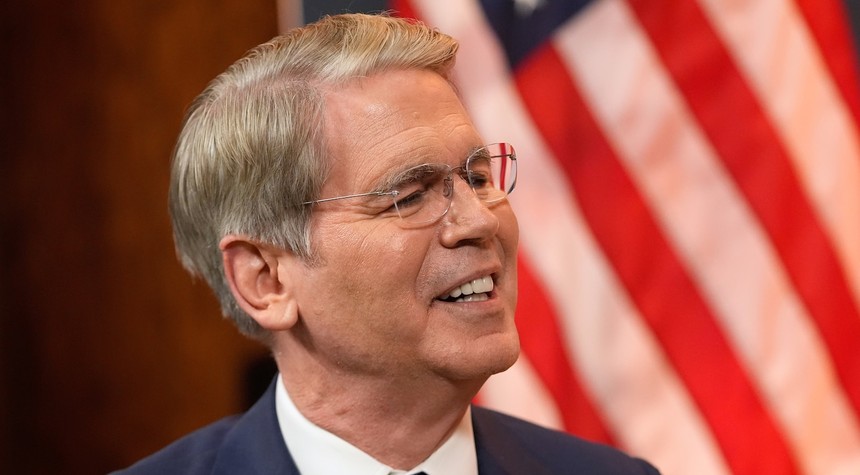
The Trump administration will impose sanctions on another financial institution this week as part of an escalating campaign to economically isolate Iran, Treasury Secretary Scott Bessent announced Sunday.
Speaking ahead of Group of 20 meetings in Asheville, North Carolina, Bessent characterized the administration’s approach in stark terms. The Treasury Department intends to employ what he described as “financial violence” against entities conducting business with the Islamic Republic. The administration has identified specific targets and made clear that continued transactions with Iran will not be tolerated.
Bessent will meet individually with finance ministers from the world’s major and developing economies at the G20 gathering, where he plans to encourage international cooperation in the economic isolation effort. The administration recently indicated it would shift from military strikes to economic pressure as the conflict with Iran reaches the six-month mark, promising what officials have termed an “economic D-Day” against a nation already subjected to decades of sanctions.
The timing of these announcements comes amid renewed military tensions. American forces struck Iranian rocket launchers positioned on the Strait of Hormuz on Sunday, marking the first military action in a month and breaking a brief lull in hostilities. Iran has vowed retaliation for what it characterized as a deadly attack.
The Treasury Department’s initial official action in this economic pressure campaign came Friday with a proposed rulemaking that would, if finalized, sever the Emirati branches of Banque Misr, Egypt’s second-largest bank, from access to the American financial system. The measured approach of stopping short of direct sanctions on the Egyptian institution itself suggests the administration remains cautious about penalizing major trading partners that maintain business relationships with Iran.
This careful balance becomes particularly significant when considering China, which stands as Iran’s largest trading partner and primary purchaser of Iranian oil. Bessent confirmed he will address the matter with Chinese counterparts at the G20 meeting and stated that “all options are on the table” regarding potential sanctions against Beijing for its continued Iranian oil purchases.
The Treasury Secretary rejected characterizations that the administration has shown reluctance in confronting China over Iran transactions, calling such interpretations a false narrative. He emphasized that both Washington and Beijing share common interests in reopening the Strait of Hormuz and preventing Iranian nuclear weapon development.
The administration faces a complex diplomatic calculus as it pursues this economic isolation strategy. While ramping up pressure through the financial system, officials must navigate relationships with countries including China and India that maintain substantial commercial ties with Iran. The approach thus far has relied more heavily on warnings to Iran’s trading partners rather than immediate imposition of new sanctions.
The effectiveness of this strategy remains to be tested, particularly given Iran’s experience weathering previous sanctions regimes. The administration’s success will likely depend on securing meaningful international cooperation and maintaining pressure without alienating allies and major economic partners whose participation proves essential to the isolation effort.
Related: Orange County Animal Control Employs Drone Technology to Rescue Lost Pets
