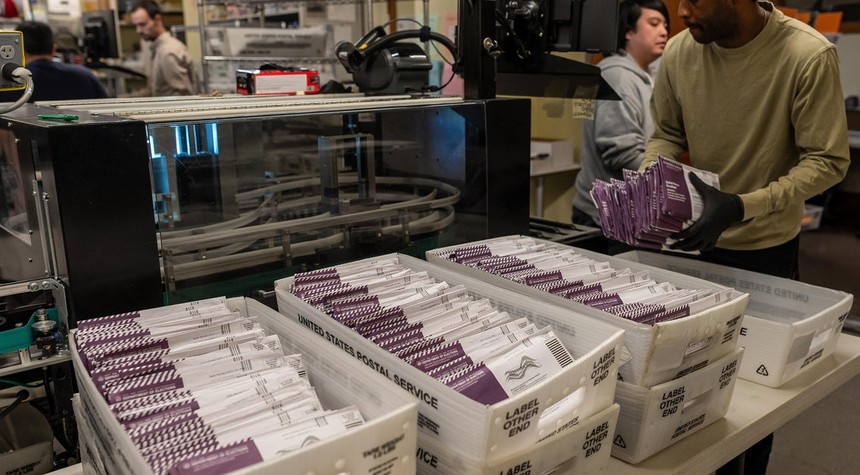
The Trump administration has escalated a contentious legal battle over California’s election procedures, filing an emergency appeal with the Supreme Court on Monday after lower courts declined to order the segregation of ballots cast by individuals the government suspects are not United States citizens.
The Justice Department’s request centers on more than 20,000 people identified on a government list as potential noncitizens who nonetheless appear on voter registration rolls. With over 6 million mail ballots already returned statewide as of Sunday, and voting having commenced in early October, the administration argues that time is running short to preserve the integrity of the electoral process.
Solicitor General D. John Sauer characterized the government’s request as a “modest remedy” designed to prevent votes cast by noncitizens from diluting the ballots of eligible voters. The core of the administration’s argument rests on a simple premise: once questionable ballots are mixed with legitimate ones, there exists no mechanism to separate them later.
“Once California commingles the challenged ballots with lawful ones, there is no way to get the challenged ballots back,” Sauer wrote in his filing to the high court. The administration maintains that segregating these ballots now represents the only viable path to preserving the district court’s ability to grant meaningful relief following a full examination of the merits.
The dispute began when the Justice Department transmitted letters to California’s secretary of state and Los Angeles County’s top elections official, providing a list of 20,000 individuals allegedly registered to vote despite lacking citizenship status. The department demanded that any ballots returned by these individuals be set aside pending verification of their citizenship.
California officials have raised substantial concerns regarding the accuracy of the government’s list and the risk of disenfranchising eligible voters. Their skepticism has found support in the federal judiciary thus far.
U.S. District Judge David Carter rejected the administration’s request for a temporary restraining order last Wednesday, stating unequivocally that “constitutional rights and our democracy are at stake.” The judge, appointed during the Clinton administration, emphasized that individuals who have satisfied California’s voter registration requirements must not be stripped of fundamental rights based on allegations he characterized as unfounded and derived from procedures marked by uncertainty and errors.
The Ninth Circuit Court of Appeals subsequently denied the Justice Department’s request in a 2-1 decision on Friday, maintaining the lower court’s position that the ballots should not be segregated.
The administration now turns to the nation’s highest court, seeking intervention in what has become a fast-moving legal confrontation unfolding mere days before Tuesday’s elections. With more than 23 million registered voters in California, the outcome of this dispute carries significant implications for how states verify voter eligibility and handle challenges to voter registration rolls.
The Supreme Court’s response to this emergency appeal will determine whether thousands of ballots remain in play or are set aside pending further review, a decision that must be rendered with considerable speed given the electoral calendar.
Related: American Manufacturing Posts Strongest Growth in Nearly Five Years