
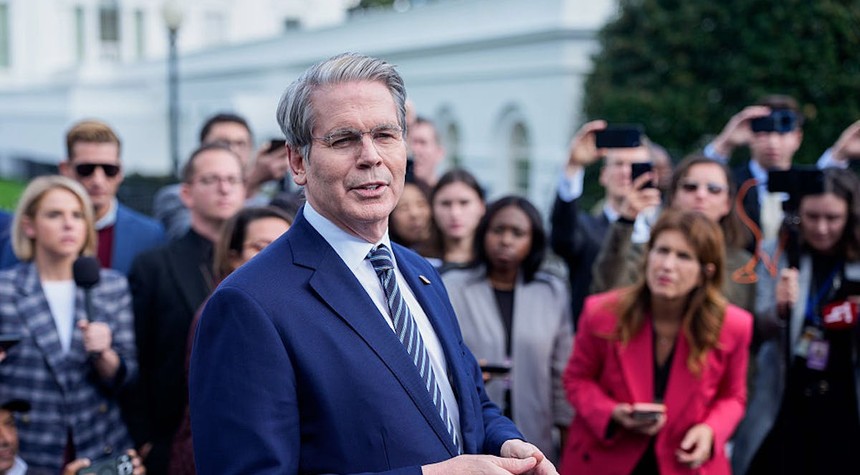
Treasury Secretary Scott Bessent offered a measured assessment of the American economy this weekend, acknowledging weakness in specific sectors while firmly rejecting concerns about a widespread recession.
During a Sunday interview, Bessent addressed questions about the current state of economic affairs with characteristic directness. When pressed about previous statements identifying recessionary conditions in certain areas of the economy, the Treasury Secretary pointed specifically to housing and other interest rate-sensitive sectors as experiencing particular difficulty.
“Well, clearly housing has been struggling,” Bessent stated, noting that sectors most affected by interest rate fluctuations have faced the most significant challenges.
The Secretary also addressed the economic impact of the recent 43-day government shutdown, which occurred under Democratic leadership. According to Bessent, this prolonged closure resulted in nearly 10,000 canceled flights and delivered a 1.5 percent blow to the nation’s gross domestic product.
However, when asked directly whether the entire country faced imminent recession risk, Bessent’s response was unequivocal.
“No, I am very confident about 2026,” the Secretary declared, citing a combination of factors he believes will drive economic improvement.
Bessent pointed to what he described as the President’s successful negotiation of peace agreements, tax legislation, and trade arrangements as foundational elements for future growth. Central to his optimistic outlook is the administration’s comprehensive tax legislation, which he referenced as the “One Big, Beautiful Bill.”
The Treasury Secretary explained that this legislation addresses affordability through two primary mechanisms: reducing the price of goods and increasing real incomes for American workers. He highlighted several key provisions aimed at working families, including the elimination of taxes on tips, overtime pay, and Social Security benefits. Additionally, the legislation provides for automatic deductibility on loans for American-manufactured automobiles.
These tax changes, Bessent indicated, will begin taking effect in the coming months. He predicted that when Americans adjust their tax withholding to reflect the new policies, working families will see substantial refunds during the first quarter of 2026.
“I am very, very optimistic on 2026,” Bessent concluded. “We have set the table for a very strong, non-inflationary growth economy.”
The Secretary’s comments come at a time when economic indicators have painted a mixed picture. While certain sectors show strain, particularly in real estate markets affected by elevated interest rates, the administration maintains that its policy framework will generate broad-based economic expansion without triggering inflationary pressures.
The housing market’s struggles reflect the persistent challenge of higher borrowing costs, which have made home purchases less affordable for many Americans. This sector’s weakness has rippled through related industries, from construction to home furnishings.
Nevertheless, the Treasury Department’s position remains that these sectoral difficulties do not indicate systemic economic failure. Instead, administration officials argue that targeted policy interventions, combined with reduced regulatory burdens and favorable trade conditions, will generate sufficient momentum to overcome current headwinds and produce sustained growth throughout 2026 and beyond.
Related: Trump Ends Deportation Protections for Somalis in Minnesota
