
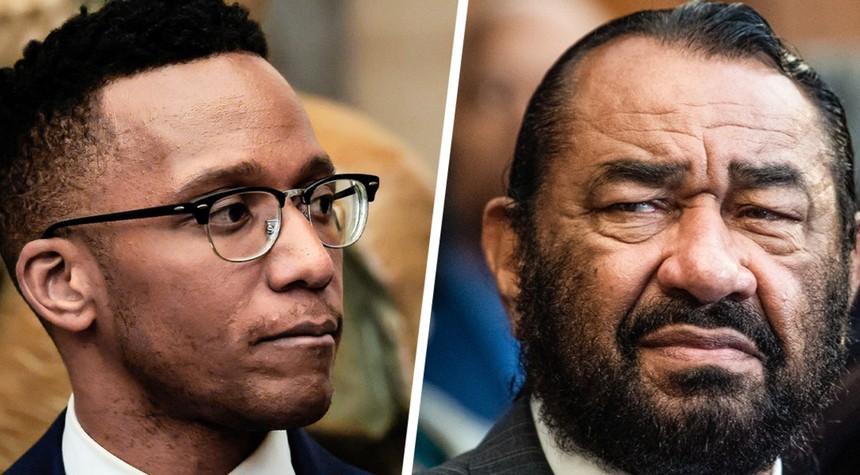
Texas redistricting has produced an unusual political collision in Houston, where the newest member of Congress finds himself facing off against one of the chamber’s longest-serving representatives in a Democratic primary.
Representative Christian Menefee, who took office earlier this month following a special election victory in late January, now confronts an unexpected challenge in his bid for a full term. Menefee won his seat after the death of Representative Sylvester Turner last year, but the congressional map he campaigned under no longer exists in its previous form.
The Republican-controlled Texas Legislature redrew district boundaries across the state, and the effects are now materializing in concrete political consequences. Menefee must now seek election in a district composed largely of voters who were not part of his original constituency. More significantly, he faces competition from Representative Al Green, a Democratic incumbent whose own district was redrawn to favor Republican candidates.
Green, rather than face increasingly difficult odds in his reconfigured district, chose to run in the same territory where Menefee is seeking a full term. This places two sitting Democratic representatives in direct competition for a single seat.
The situation in Houston represents just one example of how the redistricting process has reshaped Texas politics. The new congressional map, which sparked legal challenges and political controversy when it was unveiled last year, was explicitly designed to strengthen Republican prospects in the midterm elections. The effects have extended beyond general election dynamics to create complications within Democratic primaries themselves.
Similar circumstances have emerged in other parts of the state. In the Dallas area, former Representative Colin Allred endorsed current Representative Julie Johnson to succeed him in a district that has also undergone boundary changes. These endorsements and strategic decisions reflect the broader scramble among Democratic officeholders to adapt to a political landscape that has been fundamentally altered by the redistricting process.
The Texas redistricting effort drew immediate criticism from Democrats and voting rights advocates who argued that the new maps diluted minority voting strength and entrenched partisan advantage. Legal challenges followed, though the maps have remained in effect for the current election cycle.
For voters in affected districts, the primary elections will determine not only which candidates advance to the general election but also how effectively their communities maintain representation in Congress. The contest between Menefee and Green in Houston presents a particularly stark choice, forcing Democratic voters to select between a veteran legislator with years of seniority and institutional knowledge, and a newcomer who has only just begun his congressional tenure.
The outcome of these redistricting-induced primary battles will help determine the composition of the Texas congressional delegation and may influence the balance of power in the House of Representatives. What remains clear is that the Republican redistricting strategy has achieved at least one of its objectives: creating difficult circumstances for Democratic incumbents, even before the general election campaign begins in earnest.
Related: Federal Officials Confirm ICE Agents Will Not Monitor Polling Locations During Elections
