
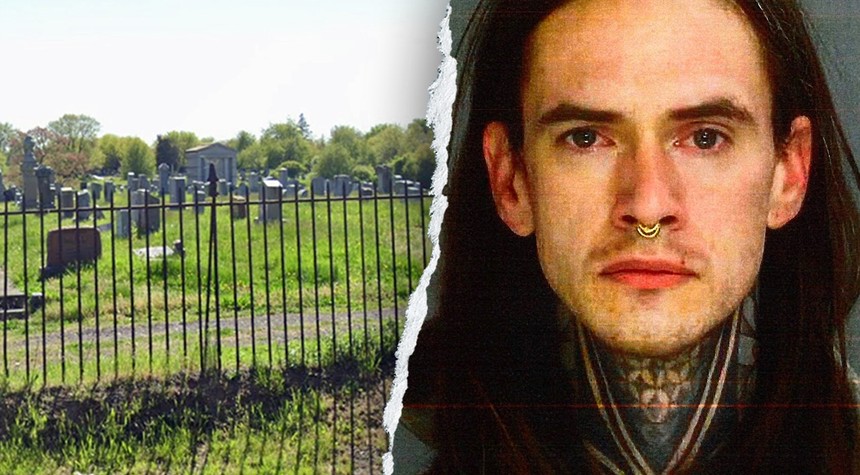
A Delaware County man appeared in court Friday to face an extraordinary array of criminal charges stemming from what authorities describe as one of the most disturbing cases of cemetery desecration in recent memory.
Jonathan Gerlach, 34, stood before the court in a lime green prison jumpsuit and waived his right to an evidentiary hearing. The proceeding was brief, with the defendant speaking little as the weight of nearly 500 criminal charges hung over the courtroom.
Delaware County District Attorney Tanner Rouse announced the arrest earlier this week after investigators discovered more than 100 full or partial sets of human remains at Gerlach’s residence and in a storage unit he maintained. The remains were allegedly taken from Mount Moriah Cemetery, a historic burial ground located near Philadelphia.
The charges against Gerlach include burglary, abuse of a corpse, and desecration of monuments. Each charge represents a serious felony under Pennsylvania law, and together they paint a picture of systematic violation of one of society’s most sacred spaces.
Gerlach was arrested at Mount Moriah Cemetery on January 6. Those who observed Friday’s court appearance noted that he looked markedly different from his booking photograph. Clean-shaven with his hair pulled back in a bun, the defendant bore little resemblance to the disheveled figure captured in official police photographs just days earlier.
Mount Moriah Cemetery holds particular significance in the Philadelphia area. As a historic burial ground, it serves as the final resting place for generations of families and contains graves dating back more than a century. The alleged desecration represents not merely a violation of law, but an affront to the memory of the deceased and the dignity their families expected would be preserved in perpetuity.
The investigation that led to Gerlach’s arrest involved multiple law enforcement agencies working to catalog the recovered remains and match them to specific burial sites within the cemetery. This painstaking process continues as authorities work to restore what dignity they can to the disturbed graves.
The case raises troubling questions about cemetery security and the protection of burial grounds, particularly historic sites that may lack modern surveillance systems or regular patrols. Mount Moriah Cemetery, like many older burial grounds, relies on a combination of physical barriers and societal respect for the dead to prevent such violations.
As the legal process moves forward, prosecutors face the task of presenting evidence for hundreds of individual charges. The sheer scope of the alleged crimes presents unusual challenges for both the prosecution and the court system.
Gerlach remains in custody as the case proceeds through the judicial system. The next steps in the legal process will determine how quickly this disturbing chapter can be brought to a conclusion, and what measure of justice can be achieved for the violated graves and the families whose loved ones’ final rest was so callously disturbed.
Related: Skydiver Left Dangling From Scoreboard in Virginia Tech Stadium Incident
