
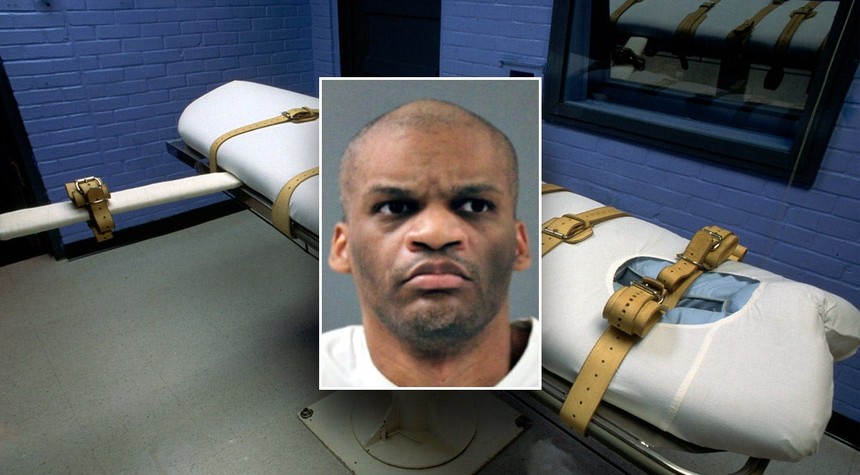
A Texas death row inmate declined to make a final statement Wednesday evening before the state carried out his execution for the murders of three people during a failed robbery attempt nearly two decades ago.
LeJames Norman, 40, simply shook his head when the warden at the state penitentiary in Huntsville asked if he wished to speak. Minutes later, he was pronounced dead by lethal injection at 6:44 p.m.
Norman had been sentenced to death for the fatal shootings of Samuel Roberts, 24, Tiffani Peacock, 18, and Celso Lopez, 38. The three victims shared a home in Edna, approximately 100 miles southwest of Houston, where they were killed in 2005.
According to court records, Norman and an accomplice, Ker’Sean Ramey, believed cocaine was stored inside the residence and planned to steal it. They found no drugs. Both men were convicted in the killings and sentenced to death. Ramey’s execution is scheduled for next week.
Norman evaded capture for five months following the murders, fleeing to Mexico before authorities arrested him as he attempted to re-enter the United States. Despite pleading guilty to capital murder, Norman’s case proceeded to a jury, which ultimately decided he should receive the death penalty.
The U.S. Supreme Court denied a last-minute request from Norman’s attorneys to halt the execution Wednesday.
In his final moments, Norman lay secured to a steel table in the execution chamber. His sister, two of his children, and a friend observed from behind a viewing window. After receiving a lethal dose of the sedative pentobarbital, Norman took several deep breaths, appeared to yawn, and made snoring sounds before ceasing all movement. A physician examined him approximately 30 minutes later and declared him deceased.
No relatives or friends of the three victims attended the execution.
Norman’s execution marks the fifth carried out in Texas this year, continuing the state’s position as the nation’s most active death penalty jurisdiction. Texas has executed more inmates than any other state since the Supreme Court reinstated capital punishment in 1976.
The case represents one of several instances where individuals have been sentenced to death for crimes committed during robbery attempts that yielded no proceeds. Legal experts have long debated whether such outcomes should influence sentencing considerations, though courts have consistently held that the failure to obtain stolen goods does not diminish the severity of murder committed during the commission of a felony.
The execution proceeded without complications, following established protocols that have become routine in Texas’s system of capital punishment. State officials confirmed that all legal requirements were satisfied before the sentence was carried out.
Related: Massive Digital Evidence Review Underway in Philadelphia Missing Persons Case
