
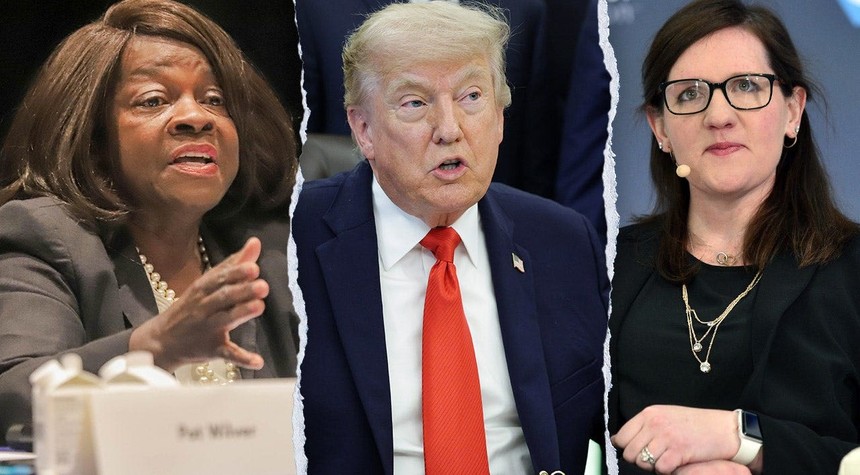
Two separate Supreme Court cases involving President Donald Trump’s authority to remove federal officials are proceeding along markedly different legal paths, according to constitutional scholars analyzing the administration’s strategies before the nation’s highest court.
The cases, Slaughter v. Trump and Trump v. Cook, both concern presidential removal power, but legal experts emphasize they present fundamentally distinct constitutional questions that may yield different outcomes.
In Slaughter v. Trump, the administration has mounted a direct constitutional challenge to statutory restrictions limiting the president’s ability to dismiss Federal Trade Commission Commissioner Rebecca Kelly Slaughter. The Trump legal team argues that constraints on presidential removal authority violate Article II executive powers granted by the Constitution.
The current FTC Act permits the president to remove commissioners only for specific reasons, including inefficiency, neglect of duty, or misconduct. The administration contends these limitations unconstitutionally restrict presidential authority.
The second case, Trump v. Cook, centers on whether the president satisfied the Federal Reserve Act’s “for cause” removal requirement when dismissing Federal Reserve Governor Lisa Cook. Trump has maintained that Cook’s alleged misconduct involving mortgage disclosure documents provided sufficient justification for her removal under existing statutory standards.
Joel Alicea, a law professor at Catholic University of America, noted the administration’s divergent approaches in the two cases. In Slaughter, Solicitor General John Sauer presented an explicit constitutional argument asserting presidential authority to dismiss FTC commissioners at will, regardless of statutory language.
However, the administration adopted a considerably more restrained position in the Cook case. “The president’s team chose not to raise the constitutional argument in Cook,” Alicea observed, suggesting the Supreme Court has already indicated that the Federal Reserve presents unique constitutional considerations rooted in historical precedents from the nation’s early banking system.
The legal landscape became more complex following the Court’s recent emergency ruling in Trump v. Wilcox, which permitted removals of National Labor Relations Board and Merit Systems Protection Board officials to proceed while litigation continued. Nevertheless, the Court declined to extend that reasoning to question the Federal Reserve Board’s tenure protections, signaling a potential willingness to treat different agencies differently based on their historical foundations and constitutional status.
These cases arrive as some Democrats have renewed calls to expand the Supreme Court, with figures including former Vice President Kamala Harris advocating for structural changes to the judiciary. The timing has intensified political attention on the Court’s deliberations regarding executive power.
The outcomes of these cases could significantly reshape the balance of power between the executive branch and independent federal agencies. A ruling favoring broad presidential removal authority in Slaughter could overturn nearly nine decades of precedent establishing independence for certain regulatory commissioners. Conversely, a decision upholding existing restrictions would reinforce congressional authority to structure independent agencies with protection from direct presidential control.
The Supreme Court’s handling of these cases will likely provide clarity on the extent of presidential power over the administrative state, a question that has gained prominence as successive administrations have tested the boundaries of executive authority over federal agencies designed to operate with some degree of independence from political pressure.
Related: ICE Officer Saves Drowning Child in Florida Pool Rescue
