
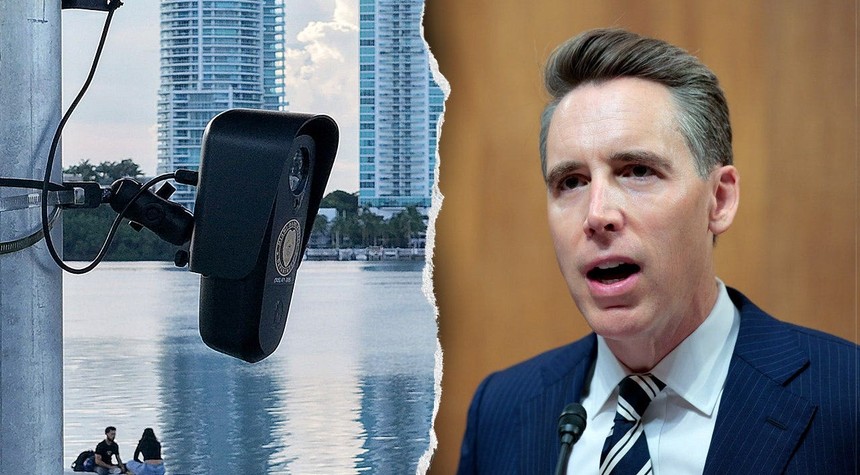
Four chief executives of artificial intelligence surveillance companies have been summoned to appear before the Senate Judiciary Subcommittee on Crime and Counterterrorism next week, as federal lawmakers escalate their examination of camera systems that monitor the movements of American citizens across the nation.
The hearing, scheduled for September 23rd and titled “Always Watching: Flock’s Nationwide AI Surveillance Network,” represents the latest congressional effort to address mounting concerns about privacy violations stemming from automated license plate readers and related surveillance technology deployed in communities nationwide.
Senator Josh Hawley of Missouri, who chairs the subcommittee, has made clear the stakes of this investigation. “Americans do not surrender their privacy rights when they drive to work, drop their kids off at school, or go to church,” the senator stated. His investigation aims to determine precisely who maintains access to data on hundreds of millions of Americans and how that information is being utilized.
The executives called to testify include Garrett Langley of Flock Safety, Rick Smith of Axon Enterprise Inc., Greg Brown of Motorola Solutions, and Filip Kaliszan of Verkada. One company has already indicated that its chief executive cannot attend, though it claims to be cooperating with the subcommittee’s information requests.
A spokesperson for Verkada emphasized that the company’s customers cannot search a national network because no such network exists, stating that customers can only access data within their own individual systems. This distinction, however, may provide little comfort to those concerned about the broader implications of such technology.
The controversy surrounding these surveillance systems centers on a fundamental question: Should law-abiding Americans be subject to automated tracking of their daily movements when no crime has been committed and no reasonable suspicion exists? Critics argue that the widespread deployment of these cameras represents an unprecedented intrusion into the private lives of citizens who have committed no wrongdoing.
The technology in question utilizes artificial intelligence to read and record license plates, creating extensive databases that document when and where vehicles travel. Former Pentagon officials have warned that unchecked expansion of such systems could transform American communities into surveillance states reminiscent of authoritarian regimes.
The concern has transcended partisan divisions, with both federal lawmakers and state governors calling for investigations into how these companies handle the images and data their systems generate. The involvement of multiple levels of government suggests a broad recognition that the issues at stake affect fundamental American liberties.
Florida Governor Ron DeSantis has already taken decisive action, ordering the removal of all license plate reader cameras from state roads in his jurisdiction. This move signals that the debate over surveillance technology may result in concrete policy changes beyond congressional hearings.
The scheduled testimony arrives at a moment when Americans across the political spectrum are grappling with the proper balance between public safety and personal privacy. While proponents of the technology argue it assists law enforcement in solving crimes and locating missing persons, opponents contend that such benefits do not justify the creation of a surveillance infrastructure that monitors law-abiding citizens without their knowledge or consent.
As these executives prepare to face questions from senators next week, the nation watches to see whether Congress will impose meaningful restrictions on this rapidly expanding industry or whether the march toward comprehensive automated surveillance will continue unabated.
Related: Military Establishes Uniform Testosterone Screening Protocol After Brief Withdrawal
