
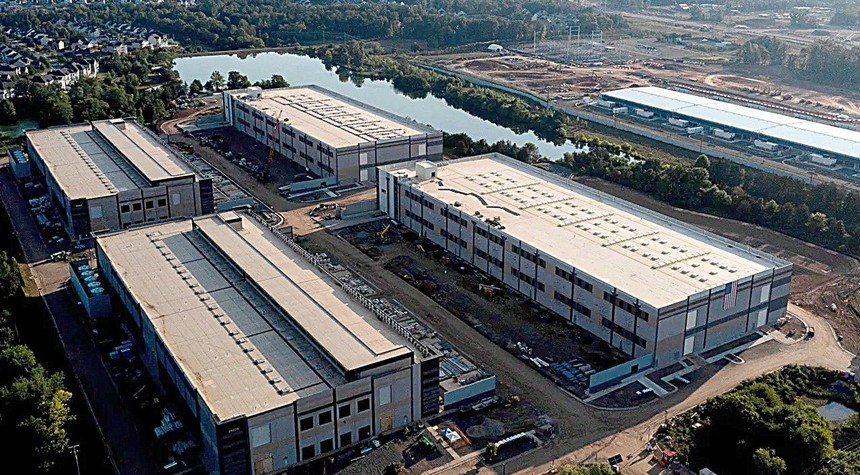
Senate Republicans find themselves in a delicate position as the midterm elections approach, balancing constituent concerns about data center proliferation against their traditional preference for limited federal intervention.
Recent polling data reveals the depth of public anxiety over these facilities. A Gallup Poll published in May showed that 70 percent of Americans oppose the construction of new data centers for artificial intelligence in their communities. The concerns are practical and immediate: voters worry about increased electricity costs and water consumption, as well as the visual impact of these massive, windowless structures on their neighborhoods.
Senator Jon Husted of Ohio, one of several vulnerable Republicans facing reelection this cycle, addressed the matter at the Republican midterm convention in Dallas. His position reflects the party’s broader struggle to respond to constituent demands while maintaining consistent governing principles.
“The data center companies have not done an adequate job of explaining why they should be allowed to develop in communities,” Husted acknowledged. However, he was firm in his conviction that federal involvement would be inappropriate. “That should be a local decision, not a federal decision. I do not want the federal government telling you that you must have a data center or that you cannot have a data center.”
The issue has proven sufficiently pressing that Husted attempted to advance legislation addressing one aspect of the problem. His bill would have prevented artificial intelligence and technology companies from passing the costs of power grid infrastructure upgrades onto taxpayers. The measure had already passed the House of Representatives with overwhelming bipartisan support, 417 to 3. Yet it was blocked on the Senate floor by Senator Martin Heinrich, a New Mexico Democrat, who argued that more comprehensive legislation was necessary.
Former Representative Mike Rogers, currently running in one of Michigan’s most competitive Senate races, reported hearing “considerable concern about data centers, not just the physical structures, but what happens on the other side of artificial intelligence.” Rogers has called for a moratorium on new data center construction until voters’ questions can be adequately addressed.
His position mirrors Husted’s emphasis on local control. “I do not believe there should be a federal ban because if the federal government can ban it, it can also mandate that you must have one,” Rogers explained.
The dilemma facing Republican candidates is clear. Their constituents across the political spectrum are demanding action on data centers. These facilities raise legitimate questions about resource consumption, infrastructure costs, and community character. Yet the traditional conservative answer to such concerns has been to defer to local governance rather than expand federal authority.
As the midterm elections draw closer, Republican candidates must convince voters that their approach, emphasizing local control and private sector responsibility, can adequately address these concerns without creating new federal bureaucracies or regulatory frameworks. Whether that message will satisfy an electorate increasingly troubled by the rapid expansion of these facilities remains to be seen.
The data center debate represents a broader challenge for Republicans: how to respond to constituent demands for government action while remaining faithful to principles of limited federal power and local self-determination.
Related: Trump Addresses Media Boycott Concerns at Joint Appearance with Mamdani
