
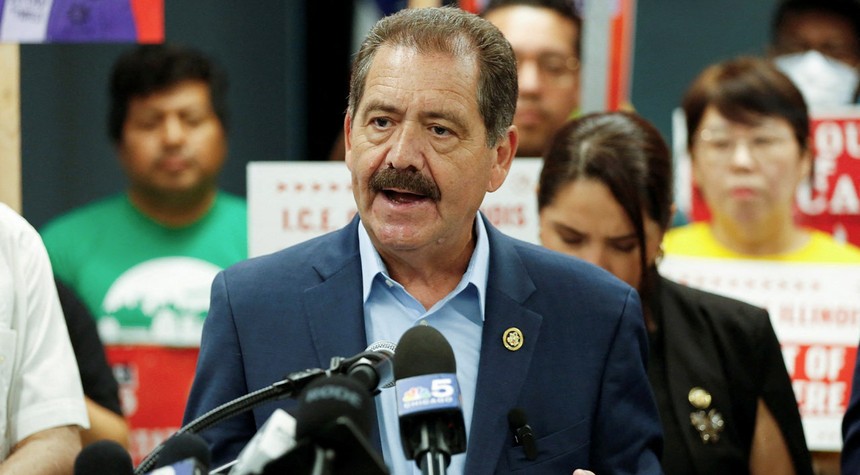
Illinois Representative Jesús García has decided not to seek reelection to Congress, according to sources familiar with the matter, ending a tenure that began when voters first sent him to Washington in 2018.
The Democratic congressman, who represents portions of Chicago’s southwest side, made his decision known just as the filing deadline for the 2026 midterm elections closed on Monday. García had submitted the necessary petitions to the Illinois State Board of Elections on October 27, indicating his intention to run again. However, in a development that has drawn criticism from political observers, his chief of staff, Patty Garcia, filed petitions to replace him on the ballot mere hours before Monday’s 5 p.m. deadline.
The maneuver has sparked accusations of political machine tactics from both Democratic and nonpartisan voices in Chicago. Alderman Raymond Lopez, who previously challenged García, characterized the move bluntly, stating that “the machine’s gonna do what the machine’s gonna do.” Lopez noted the irony of such political maneuvering from a party whose members had participated in protests against concentrated political power.
Juan Rangel, who leads The Urban Center, a centrist nonprofit organization in Chicago, issued a statement describing the succession plan as a “classic machine maneuver from a career politician who seeks to deny the voters a say on their representation.”
Patty Garcia, the congressman’s chosen successor, previously served as his district director and worked with the Latino Center for Leadership Development before joining his congressional staff.
Representative García brought a progressive voice to Congress and built his political career through years of public service in Chicago and Cook County. Before his election to Congress, he served on the Cook County Board of Commissioners and mounted a significant challenge to then-Mayor Rahm Emanuel in 2015, forcing the incumbent into a runoff election.
His departure adds to a significant reshuffling of Illinois’ congressional delegation. The state now faces five open congressional seats and an open Senate race heading into the March primary elections.
The Senate vacancy emerged in April when Senator Dick Durbin, the chamber’s second-ranking Democrat and chairman of the Judiciary Committee, announced he would not seek a sixth term. Durbin, who is 80 years old and has served in the Senate since his first election, had held the position of Democratic Whip, making him one of the most powerful figures in Senate leadership.
The simultaneous departure of both García and Durbin represents a substantial transition for Illinois Democrats, who must now navigate multiple competitive races while selecting new standard-bearers for the party in a state that has long served as a Democratic stronghold.
The controversy surrounding García’s succession planning underscores ongoing tensions within Democratic politics between established party structures and calls for more transparent, voter-driven selection processes. Whether Illinois voters will accept this transition or demand a more open primary process remains to be seen as the March primary approaches.
Related: Federal Judge Extends Block on National Guard Deployment to Portland
