
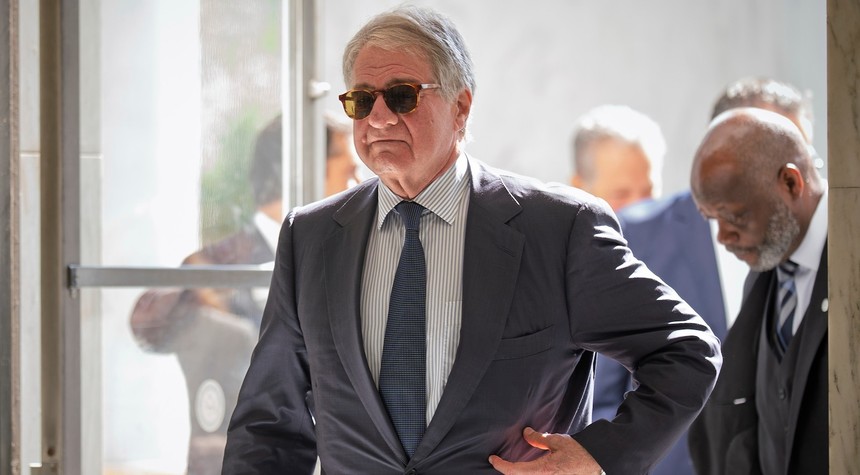
Private equity billionaire Leon Black departed a congressional interview Friday after declining to answer questions about nondisclosure agreements potentially connected to convicted sex offender Jeffrey Epstein, prompting House Oversight Committee Chairman James Comer to issue two subpoenas compelling his return.
The closed-door session, part of the committee’s ongoing examination of the government’s investigation into Epstein, ended abruptly when Black refused to discuss the terms of purported nondisclosure agreements during his voluntary transcribed interview. The Kentucky Republican announced that the subpoenas require Black to appear for a deposition on July 16 and to produce the nondisclosure agreements in question.
“During today’s voluntary transcribed interview, Mr. Black stated he wouldn’t answer questions about NDAs. Answers about the terms and substance of these NDAs are critical to our investigation,” Comer stated. “We owe it to the American people to provide transparency and ensure accountability for survivors.”
The chairman elaborated on the committee’s specific interests regarding these agreements. The panel seeks to determine whether Epstein participated in drafting the nondisclosure agreements, whether he was involved in providing financial settlements to women who signed them, and the circumstances that necessitated such agreements. These details, Comer emphasized, remain unknown and represent essential elements of the investigation.
“We knew for a long time there were NDAs out there by various people. Obviously, they’re very hard to obtain, and with this subpoena, we expect to get those NDAs in hand,” Comer explained to reporters.
According to the chairman, Black’s position during the interview was that he was not permitted to discuss the terms of the nondisclosure agreements. This response proved insufficient for committee members on both sides of the aisle.
In a notable display of bipartisan agreement, Ranking Member Robert Garcia, a California Democrat, supported the decision to issue the subpoenas. Garcia emphasized the gravity of allegations against Black and the necessity of understanding the full scope of these agreements.
“The NDAs are central to us understanding what actually happened. There are real accusations, and there are survivors who have accused Mr. Black of horrific things,” Garcia stated.
Black’s legal counsel, Susan Estrich, contested the committee’s actions, characterizing the subpoena service as politically motivated. She claimed the decision to serve Black with subpoenas occurred after less than one hour of questioning and before any inquiries about what she termed his legitimate payments to Epstein.
“This was nothing more than a planned political stunt. Mr. Epstein had no involvement with any NDAs, whether they exist or not,” Estrich asserted.
Black represents the latest in a series of wealthy and influential individuals called before the Oversight Committee regarding their associations with Epstein. The investigation continues to examine the circumstances surrounding the government’s handling of the Epstein case and the broader network of relationships that enabled his criminal conduct.
The committee’s investigation reflects Congress’s constitutional oversight responsibilities and its duty to examine whether federal agencies properly investigated Epstein’s activities. The subpoenas issued Friday signal the committee’s determination to obtain complete answers, regardless of the prominence or influence of those being questioned.
Black’s scheduled return in mid-July will test whether the committee’s subpoena power can penetrate the wall of nondisclosure agreements that have long obscured details about Epstein’s associations with powerful figures in American business and society.
Related: President Warns of Iran’s Destruction Following Repeated Ceasefire Violations
